
Last updated November 15, 2026
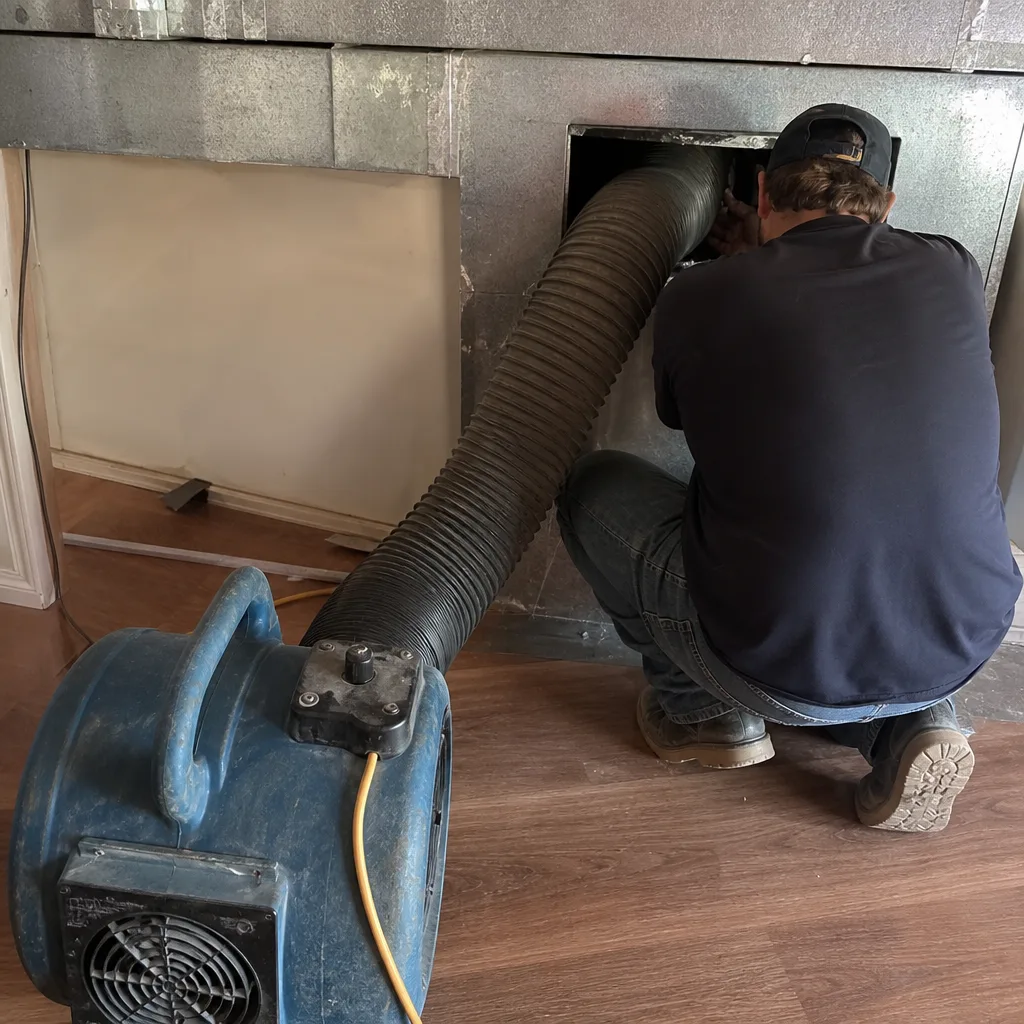
 Whole-home duct cleaning
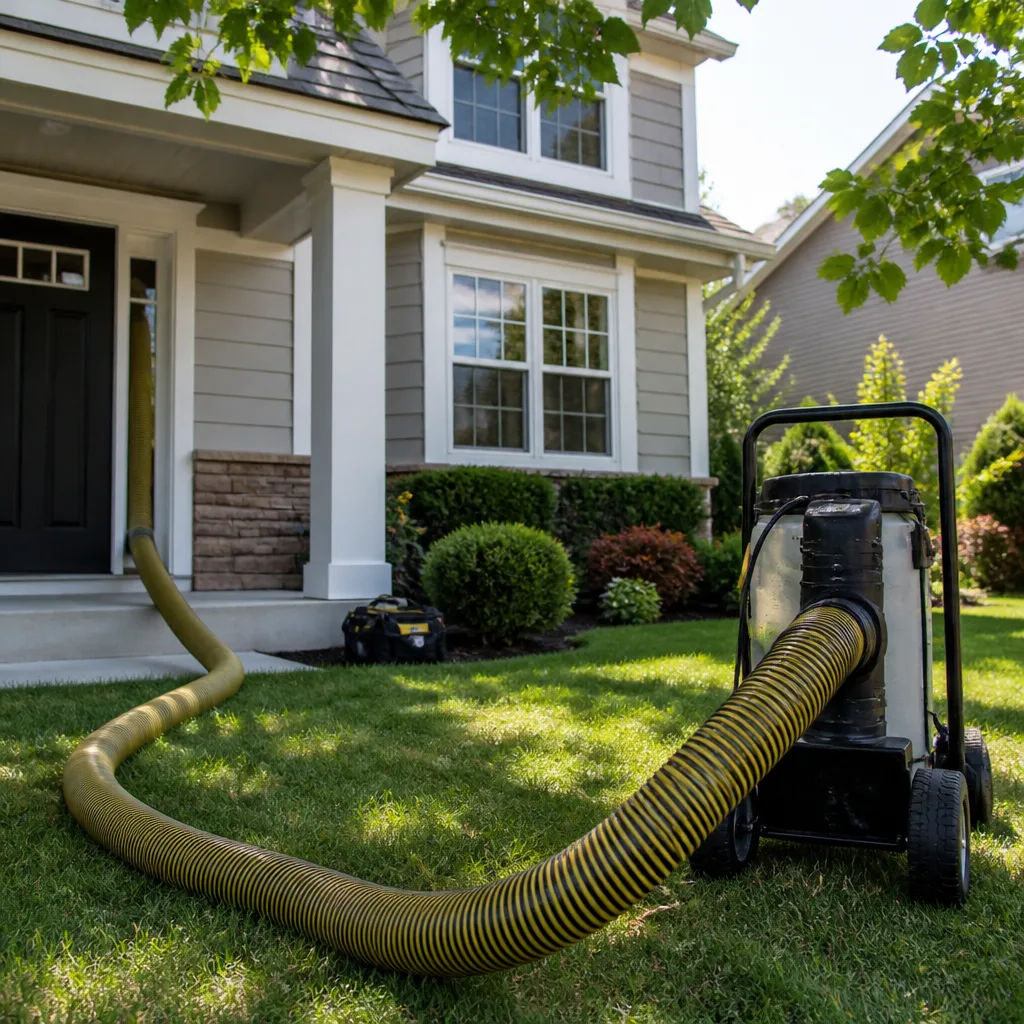
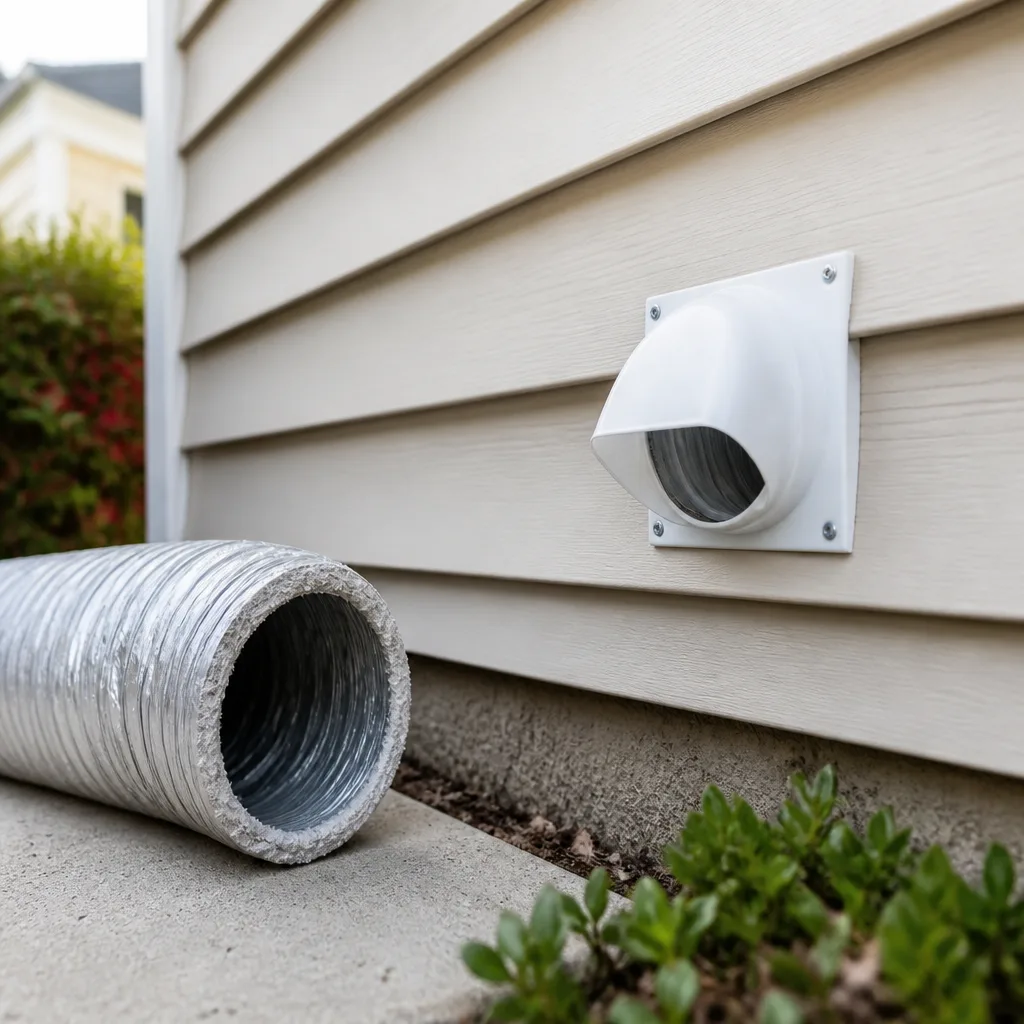 Dryer vent cleaning
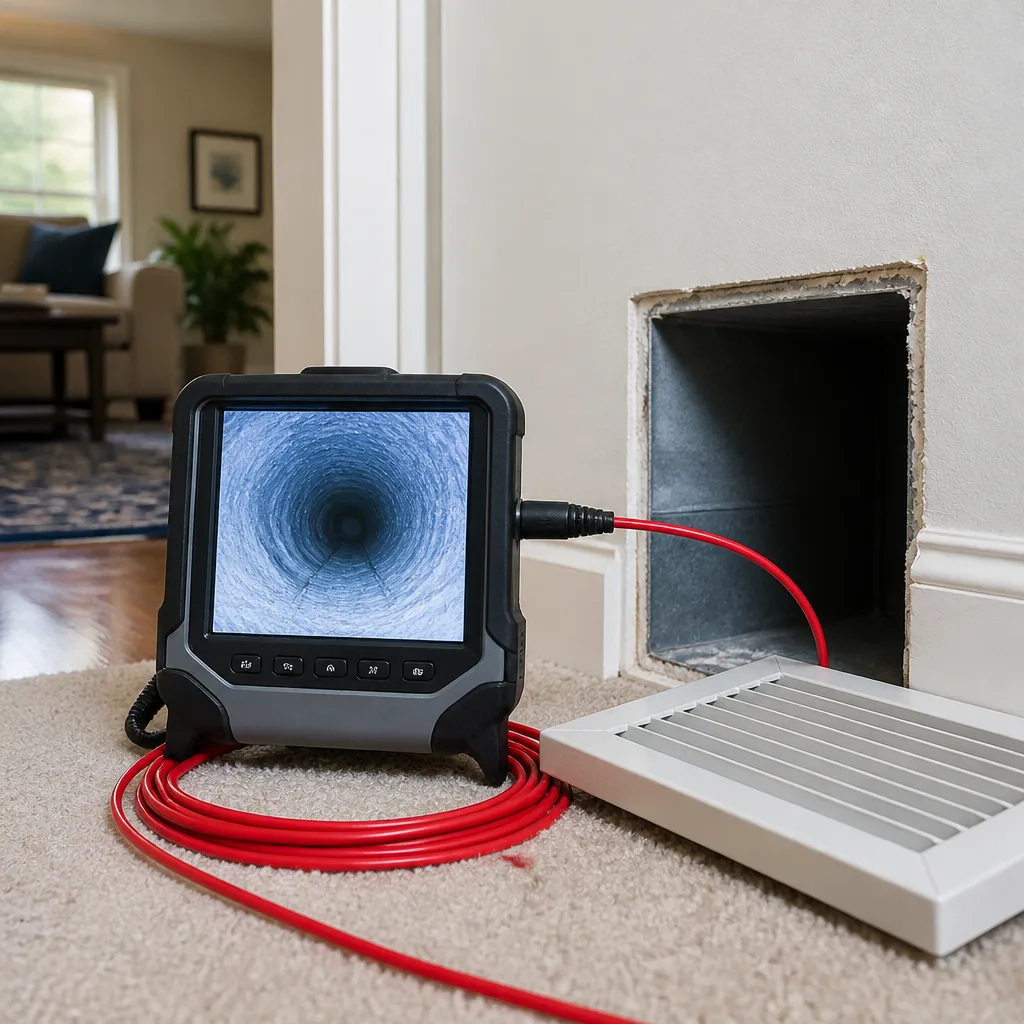 Camera inspection
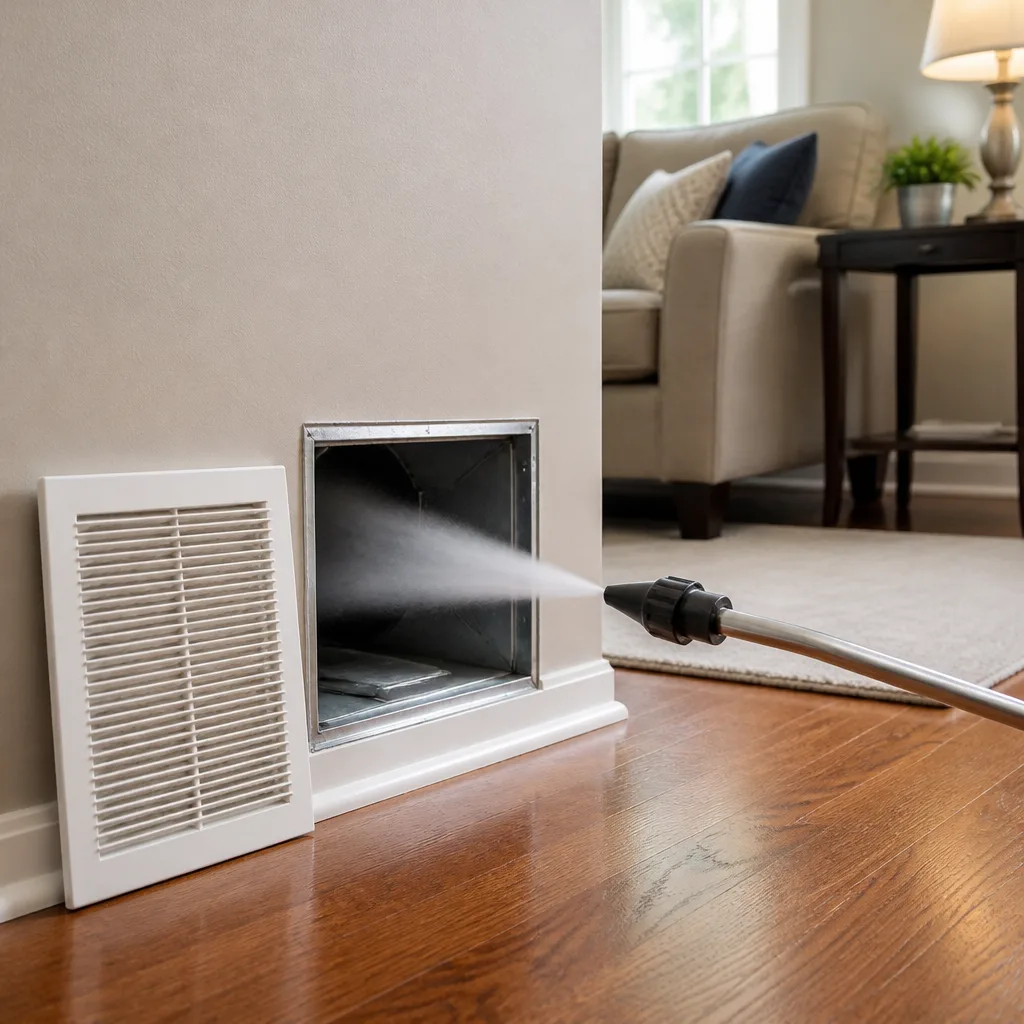 Sanitizing & deodorizing
Whole-system duct and dryer vent check with before-and-after photos - you see exactly what came out of your vents
That "$99 whole-house special" is a bait ad - the real number appears once they are in your hallway, or the "clean" is a shop-vac at the register. We photograph the inside of your ducts before and after instead.
The Complete Guide to Air Duct Cleaning in Oklahoma City
Most guides to duct cleaning read the same, whether you live in Miami or Seattle. That’s a problem for anyone in Oklahoma City, because the contamination in your ducts isn’t generic. Red-clay dust from the prairie, the wind events that carry it, and the humidity swings between our summers and winters all push debris into the system in specific ways. The advice written for a damp coastal climate doesn’t fit a 40-mph dust day in the metro. This guide covers what actually matters in Oklahoma City: how the contamination gets in, what a real cleaning does differently, and how to tell the difference between source removal and a blow-and-go. The link below is a good place to start if you want the service overview first.
Quick Answer
Air duct cleaning in Oklahoma City removes accumulated dust, red-clay particulate, and debris from your supply, return, and air-handler components using mechanical agitation and HEPA-filtered negative pressure, then confirms the system is sealed. A proper job addresses every branch of the system, not just the visible registers. It follows the industry standard for source removal and typically takes several hours depending on the size of the home. Our technicians have up to experience, and we use Shoreline Duct Cleaning equipment from Rotobrush and Nikro to get it done.
Styles & brands we work with
- Whole-home duct cleaning
- Dryer vent cleaning
- Camera inspection
- Sanitizing & deodorizing
Table of Contents
- Why Oklahoma City Ducts Get Dirty Differently
- Source Removal vs. Blow-and-Go: What You Actually Paid For
- How Oklahoma City Humidity Bonds Dust Into Biofilm
- What Industry Standards Actually Require
- System-by-System: What Should Get Cleaned
- Dryer Vent Cleaning as a Fire-Safety Service
- When Cleaning Turns Into Duct Repair
- Common Mistakes to Avoid
Why Oklahoma City Ducts Get Dirty Differently
Oklahoma City sits in a region where fine particulate load spikes on high-wind days, and the soil is red clay. When that dust loads up, it doesn’t just settle on your furniture. It also gets pulled into the return air stream and pushed through the supply side, and along the way it deposits on the duct lining, the flex ribs, and the air-handler coil. Choose any generic guide and you’ll see the same advice: dust is dust, clean it out. That misses the real problem. Red-clay and prairie dust particles are fine enough to bypass cheap filters, and over time they coat the interior surfaces rather than staying loose.
We’ve seen the pattern repeatedly in Oklahoma City homes that were sealed up tight for energy efficiency. Better sealing stops air leaks, but it also traps the dust that comes in. Your system becomes a closed loop, recirculating the same particulate for months. Add the storm-driven infiltration common here, and the load builds faster than the national average suggests.
Two other factors specific to Oklahoma City matter:
- Storm seasons. Wind events drive clay dust into the envelope, and gaps around returns and air handlers let it in even with closed windows.
- Filter bypass. A filter that seats poorly doesn’t stop dust from sliding around it into the blower and downstream ductwork.
- Extreme temperature swings. The system runs hard in summer and winter, and the cycling stresses flex joints, opening small leaks that let in unconditioned attic or crawlspace air carrying dust.
None of these are things a shop vac and a spray wand can address. They’re reasons to treat Oklahoma City duct cleaning as its own technical subject.
Source Removal vs. Blow-and-Go: What You Actually Paid For
Source removal is the method industry standards call for: mechanical agitation dislodges contamination from every surface, HEPA-filtered negative pressure keeps it in the collection system, and the process is repeated until the system is clean. Blow-and-go is the shortcut. A technician opens a register, blasts compressed air down the branch, and vacuums at the other end for a few minutes. Dust goes airborne inside the home and partially re-settles in the ducts.
In Oklahoma City, blow-and-go is common because it looks like duct cleaning from the driveway and it’s priced to win a bid. The homeowner pays once, the visible registers look better, and the contamination deeper in the run stays right where it was. What a source-removal job does differently:
- Sets up containment. HEPA vacuum equipment, connected to the main trunk, pulls the entire system into negative pressure so dust travels toward the machine, not toward you.
- Agitates the full run. The air duct cleaning process uses a rotary brush on a flexible shaft, driven from the access point to the far end of each branch, to scrub accumulated debris loose from duct walls and flex ribs.
- Repeats until clear. We run the brush and vacuum until the return path is visibly clean, not for a fixed number of minutes.
- Cleans the air handler and coil. The blower, cabinet, and evaporator coil are where particulate actually loads up.
- Verifies with before-and-after photos of your ducts. You see what came out of your system, from your system.
Professional-grade equipment, residential pricing. Rotobrush and Nikro systems are the same class of HEPA-vacuum and mechanical-brush tools used on commercial and restoration job sites. Compressed air alone doesn’t reach what a rotary brush reaches in a 30-foot flex run, and it doesn’t hold containment the way a HEPA vacuum does.
How Oklahoma City Humidity Bonds Dust Into Biofilm
Humidity in Oklahoma City doesn’t sit still. Summer dew points can climb high enough that the system condenses moisture on the evaporator coil and the downstream duct lining, then the air dries out again. That cycling moisture turns loose dust into a stuck, gummy layer, and dried-on dust that bonds to duct surfaces is far harder to remove with a vacuum alone.
The result is that a light dusting that would wash out in a drier climate becomes an adhered layer along the coil and the first few feet of the supply trunk. If the system cools with the fan off for a stretch, that wet duct lining stays damp longer, and biological growth starts to establish itself in the residue. Now the contamination is structural, not just cosmetic. Dry vacuuming alone won’t fix it; the surface needs mechanical agitation to lift the bonded layer so the HEPA capture can carry it away.
What to look for in an Oklahoma City home:
- Musty odor when the fan first starts, after the system has been off.
- Visible dark staining along the evaporator coil or the duct interior near the air handler.
- Dust that reappears on surfaces within days of cleaning.
- Higher-than-normal moisture in the return plenum area.
If the contamination is combined with a persistent moisture source, address that too. A duct cleaner can remove the biofilm-supporting residue, but if the coil is constantly wet from an unrelated refrigeration or drainage issue, that’s work for an HVAC contractor. We’ll tell you if that’s what we find.
What Industry Standards Actually Require
The industry standard for duct cleaning, set by NADCA (the National Air Duct Cleaners Association), is the ACR standard. It calls for source removal: the entire system is put under negative pressure, mechanical agitation is used on every contaminated surface, and cleaning continues until the system is verifiably clean. Marketing language doesn’t always use the same definition. A service described as “full system cleaning” may cover only the visible registers and the trunk close to the air handler.
What a source-removal job actually includes, in plain terms:
- Full negative pressure across the supply and return sides of the system.
- Mechanical agitation of every branch, not just the main trunk.
- Air handler, blower, and coil included in the scope.
- Access points cut where needed, then properly sealed afterward.
- Verification that the system is clean, not just “looks better.”
What marketing language sometimes implies but doesn’t deliver:
- “Sanitizing” as a substitute for cleaning. A fogger can’t remove contamination; it can only treat what’s already been removed properly.
- “Whole-home” without access to the air handler.
- “Deep clean” measured in minutes rather than scope.
The bottom line on standards: ask any provider in Oklahoma City what tools they use and what surfaces are included. A provider who can name the equipment and the scope answers cleanly. If the answer is vague, the scope probably is too. The brands matter here: Rotobrush mechanical brush systems, Nikro HEPA vacuums, and Abatement Technologies containment equipment all come from the professional remediation world, not the consumer rental aisle. That’s the standard to hold a quote against.
System-by-System: What Should Get Cleaned
A typical Oklahoma City home has four main components worth cleaning, and the ones skipped most often are the ones you can’t see from the thermostat. Below is the breakdown we use when we scope a job.
Supply Trunks
The main run of duct that leaves the air handler and distributes conditioned air. It’s usually accessible from the garage or attic, and it’s the section most often cleaned. It still needs mechanical agitation, not just a vacuum at the trunk. Clay dust that’s bonded to the trunk lining won’t lift without brushing.
Return Plenums
Return air carries dust from the living space back to the air handler, so the return plenum loads up faster than the supply side in most homes. It’s also more likely to be skipped because the access is less convenient. In older Oklahoma City homes, the return may run through interior wall cavities, and those cavities need a purpose-built access point if there isn’t one already.
Flex Runs
Flexible duct branches run from the trunk to each room. The corrugated interior lining traps dust in its ridges, and that’s exactly where compressed-air wands underperform. A rotary brush follows the flex run from the trunk to the boot, and the HEPA vacuum pulls the loosened debris out. Flex runs are the section where a blow-and-go service falls shortest.
Air Handler and Coil
The blower wheel, blower cabinet, and evaporator coil are where contamination accumulates most heavily, and they’re also the parts most often left off a cleaning quote. A blower wheel coated in dust loses efficiency and moves less air. The coil’s fins clog, reducing heat transfer. Cleaning these components is a different skill and a different tool set than cleaning duct runs. We do both, using Abatement Technologies containment and filtration equipment to keep the cabinet area under control during the process. We can also work with Honeywell and Aprilaire air-quality components if your system has them, so the cleaning extends to filtration components rather than stopping at the duct wall.
The takeaway: ask what’s included on the air handler. If the answer is “we just do the ducts,” the source of the contamination is staying in the system.
Dryer Vent Cleaning as a Fire-Safety Service
Dryer vent cleaning isn’t a bonus. It’s a fire-safety service, and it deserves the same systematic approach applied to HVAC ductwork. Lint accumulates in the vent run and along the transition behind the dryer, and it’s highly flammable. A partially blocked vent also forces the dryer to run hotter and longer. In Oklahoma City, where dry, windy conditions are common, lint that escapes a compromised vent fitting can add to the outdoor fire load around the vent termination.
A proper dryer vent cleaning involves:
- Disconnecting the dryer and inspecting the transition duct for crushed flex or lint buildup.
- Running a rotary brush through the full vent run to the exterior termination, in both directions where possible.
- HEPA-vacuuming the loosened lint from the run so it doesn’t re-settle inside the wall.
- Checking the exterior damper for proper operation and a clean screen.
- Reconnecting and testing airflow with the dryer running so you can confirm the fix.
Signs your dryer vent needs attention: clothes take two cycles instead of one, the dryer cabinet is hot to the touch, lint is visible around the vent termination, or the vent run hasn’t been checked since you moved in. If you’re unsure, a dryer vent cleaning visit is a straightforward way to rule out a common fire risk.
When Cleaning Turns Into Duct Repair
Source-removal cleaning usually uncovers something. Flex runs disconnected at the boot, a trunk seam that’s come apart, a return access sealed with tape and then hidden, or a branch that’s crushed and starving a room. That’s when a cleaning-only provider has to hand you off to a second contractor, and the job stalls. Air duct repair as a standalone service closes that gap.
Common repair findings in Oklahoma City ductwork:
- Disconnected flex runs at the register boot, common after attic heat cycling.
- Unsealed seams on the trunk, where conditioned air leaks into the attic.
- Crushed or kinked branches that reduce airflow to specific rooms.
- Missing access panels that should have been installed and sealed.
When we scope a cleaning, we check the system for leaks and damage before we finish. Findings get quoted as repair work, and if you approve, they’re corrected on the same visit. No second contractor to schedule, no gap between clean and sealed.
Common Mistakes to Avoid
- Choosing the lowest bid without asking what’s included. The cheapest Oklahoma City quote is often a blow-and-go. Ask which surfaces are in scope and which equipment is used before you compare prices.
- Assuming the registers are the system. Clean registers tell you nothing about the trunk, the air handler, or the flex runs behind them. The contamination you can’t see is the part that matters.
- Skipping the dryer vent. Duct cleaning visits often focus on the HVAC side and leave the dryer vent untouched. That vent is a fire load, and it’s a separate service for a reason.
- Ignoring the air handler. Cleaning ducts while leaving a caked blower wheel and coil untouched is half a job. The source of contamination stays in the system.
- Treating a musty odor as normal. A persistent musty smell in an Oklahoma City home usually points to moisture-related contamination in the duct lining or coil, not a filter problem. Dry vacuuming alone won’t remove bonded biofilm residue.
- Waiting for visible dust on furniture. By the time dust is settling on surfaces, the system has been carrying it for a while. Other signals: recent renovations, a home purchase, or allergy symptoms that flare indoors.
- Hiring a provider who can’t tell you the equipment. A professional will name the HEPA vacuum and brush system they use. Vague answers about “the latest technology” are a warning sign.
See the difference
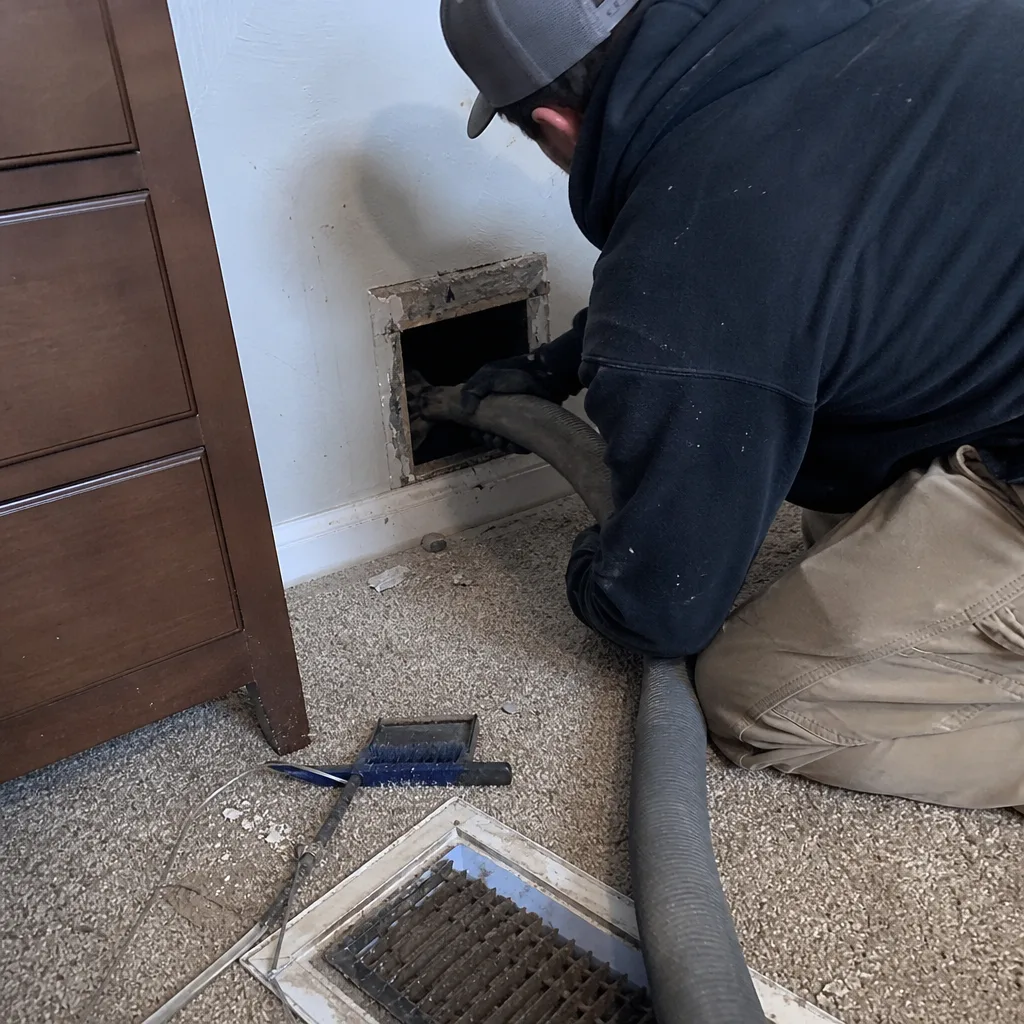 Before
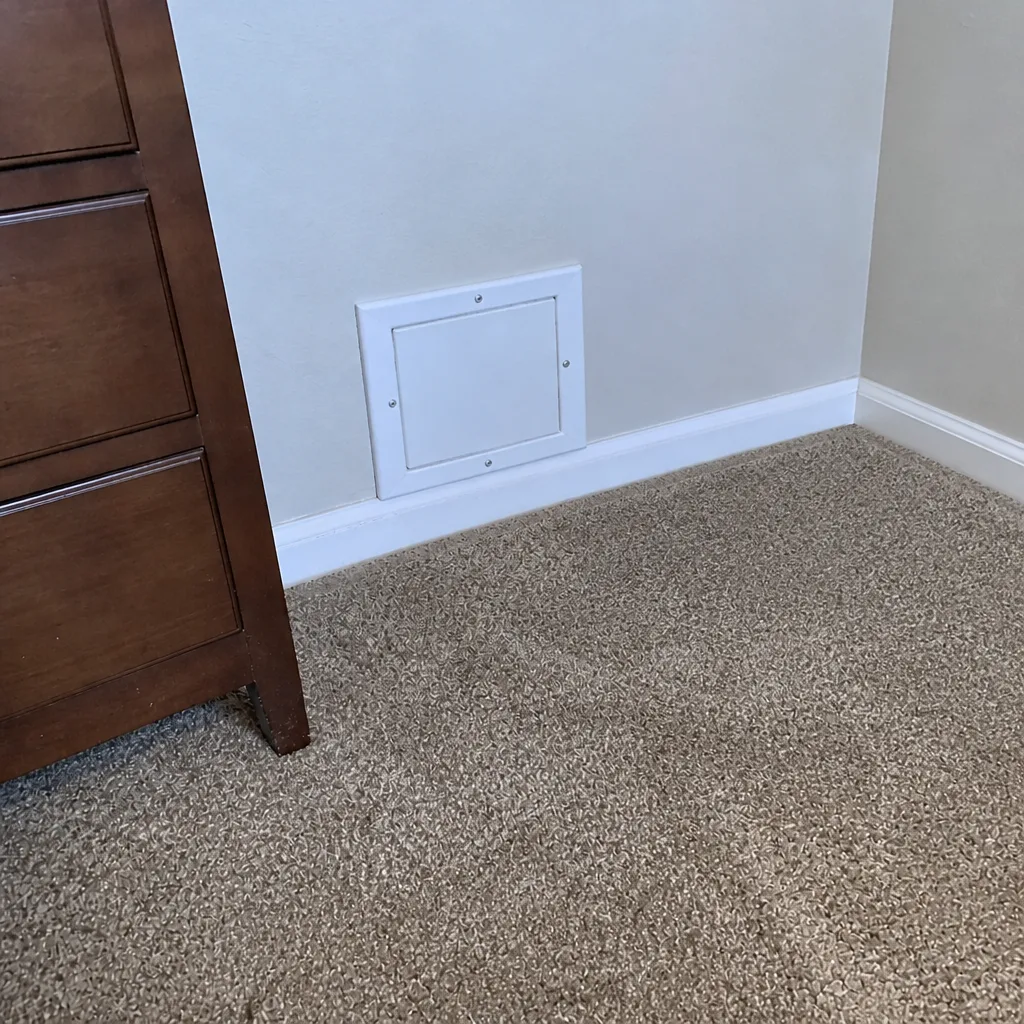 After
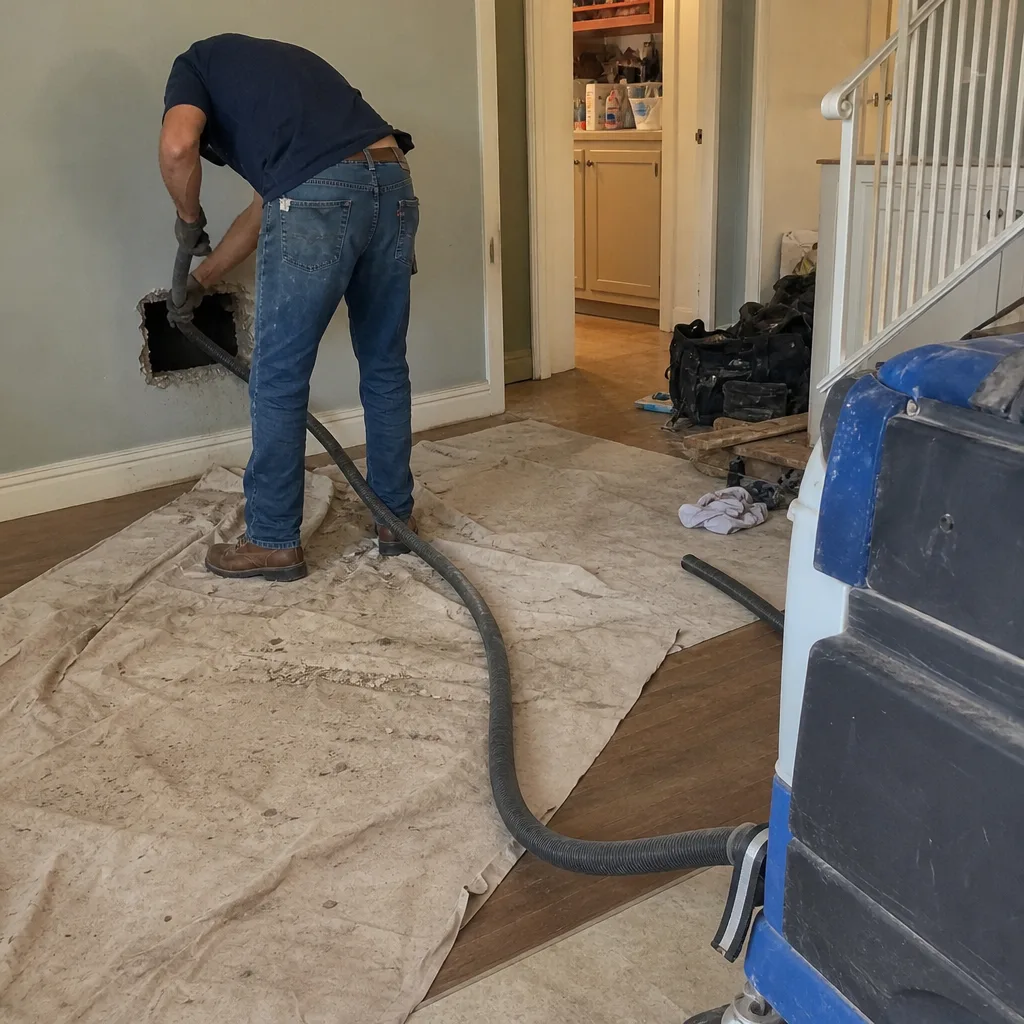 Before
 After
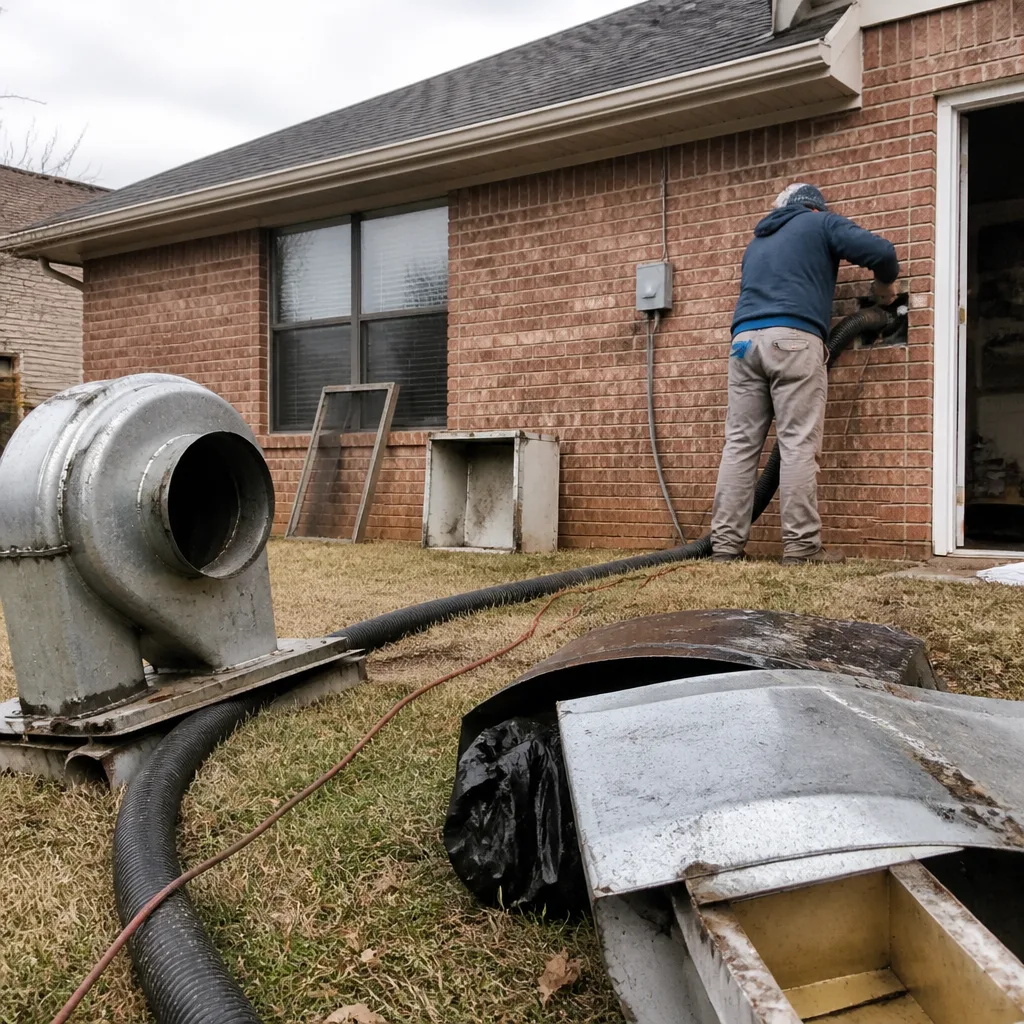 Before
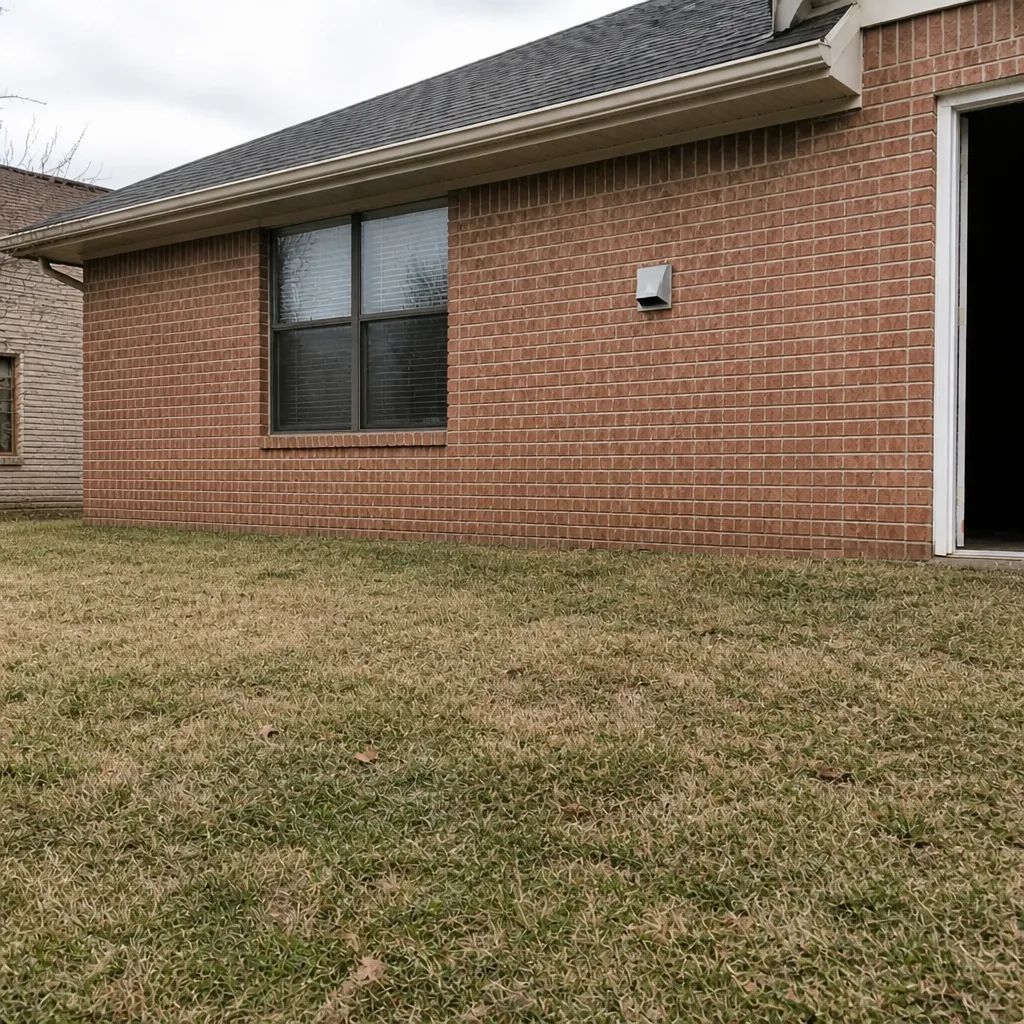 After
When to Call a Professional
Call a professional when dust reappears on surfaces within days of cleaning, when a musty odor comes from the registers each time the fan starts, or when you’ve just finished a renovation and want the drywall dust out of the system before it settles permanently. If you’ve moved into a home and can’t confirm the last duct cleaning date, a scoping visit makes sense. The same goes for a dryer that takes two cycles to dry or a dryer cabinet that runs hot. These are the signals that point to source-removal work rather than a quick surface pass.
Shoreline Duct Cleaning offers free estimates in Oklahoma City. Call (855) 360-8688. We answer 24/7, and fast dispatch runs from 7am to 7pm, Sunday through Friday.
Frequently Asked Questions
Air duct cleaning in Oklahoma City is priced per job rather than per vent, because the scope of a proper source-removal job depends on the size of the system, the number of branches, and whether the air handler and coil are included. Estimates are free, and the written estimate sets the final price. Call (855) 360-8688 for an exact quote.
Most Oklahoma City homes benefit from a cleaning every few years, and homes near active construction or on high-traffic routes often need it sooner. Watch the signals rather than the calendar: dust returning fast, musty odor from the registers, or a recent renovation. If any of those apply, an inspection is worth the call.
Source removal agitates every surface with a rotary brush while HEPA vacuum equipment holds the system under negative pressure, then repeats until the system is clean. A blow-and-go uses compressed air to knock dust loose from one end while vacuuming the other. The dust goes airborne inside the home and re-settles deeper in the run. The two services aren’t the same job, even when the price looks similar.
It can help by removing the accumulated reservoir of dust and clay particulate that the system recirculates. It won’t eliminate airborne dust entirely, and it isn’t a treatment for allergies. What it does is remove the source inside the system so the air handler isn’t pulling from it. If odor or moisture is part of the picture, the air handler and coil check matters as much as the ducts.
Yes, both cases warrant a cleaning. Renovations push drywall dust, insulation fibers, and construction debris into the return plenum, and a home purchase leaves you without a service history on the duct system. A scoping visit with before-and-after photos of your ducts is the concrete way to know what condition the system is in. Call (855) 360-8688 to schedule a free estimate.
Yes. Dryer vent cleaning is one of our three core services in Oklahoma City, not an add-on. We treat it with the same rotary brush and HEPA vacuum approach we use on HVAC ductwork, because lint accumulation is a fire risk. Call (855) 360-8688 to schedule, and we’ll include the dryer vent in the same estimate visit if you want.
The Bottom Line
Oklahoma City ductwork gets dirty in its own way. Red-clay particulate, storm-driven infiltration, and the humidity swings between summer and winter push contamination deeper than a generic guide acknowledges. A real cleaning is source removal: mechanical agitation, HEPA negative pressure, every branch of the system scrubbed, the air handler and coil included, and before-and-after photos so you know the work happened. A blow-and-go is not the same product, regardless of price. Shoreline Duct Cleaning uses professional-grade Rotobrush and Nikro equipment, works with Honeywell, Aprilaire, and Abatement Technologies components, and treats duct repair and dryer vent cleaning as standalone services that close the gaps. Call (855) 360-8688 for a free estimate. We answer 24/7, and fast dispatch runs from 7am to 7pm, Sunday through Friday.
Written by the team at Shoreline Duct Cleaning.