
Last updated November 15, 2026
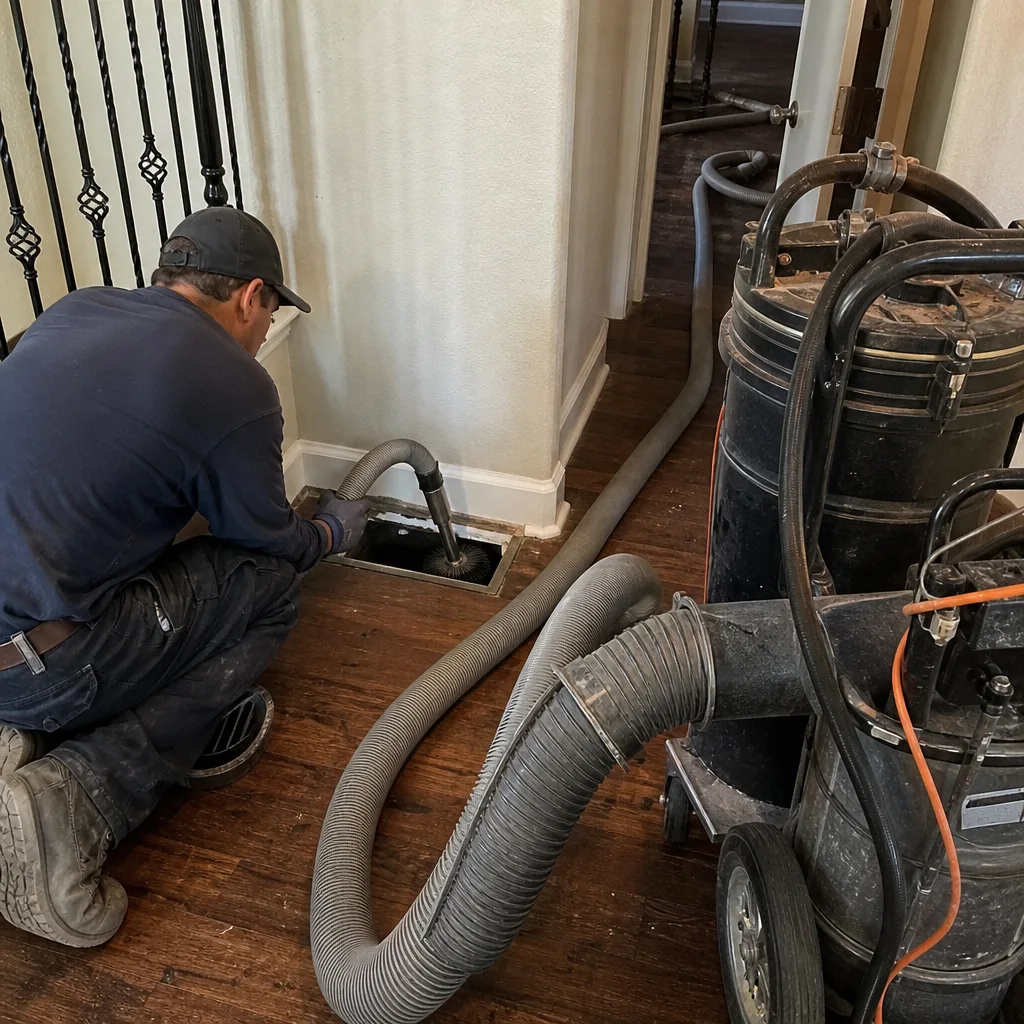
 Whole-home duct cleaning
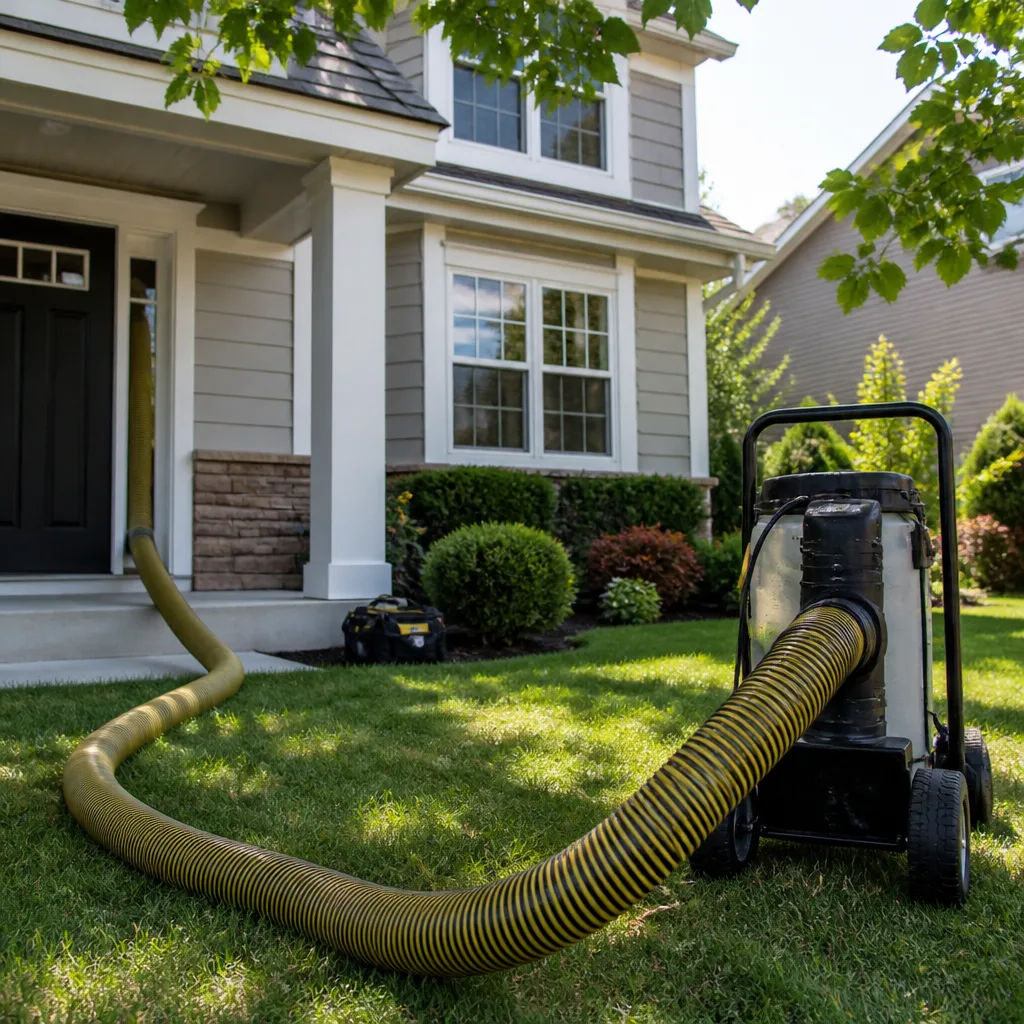
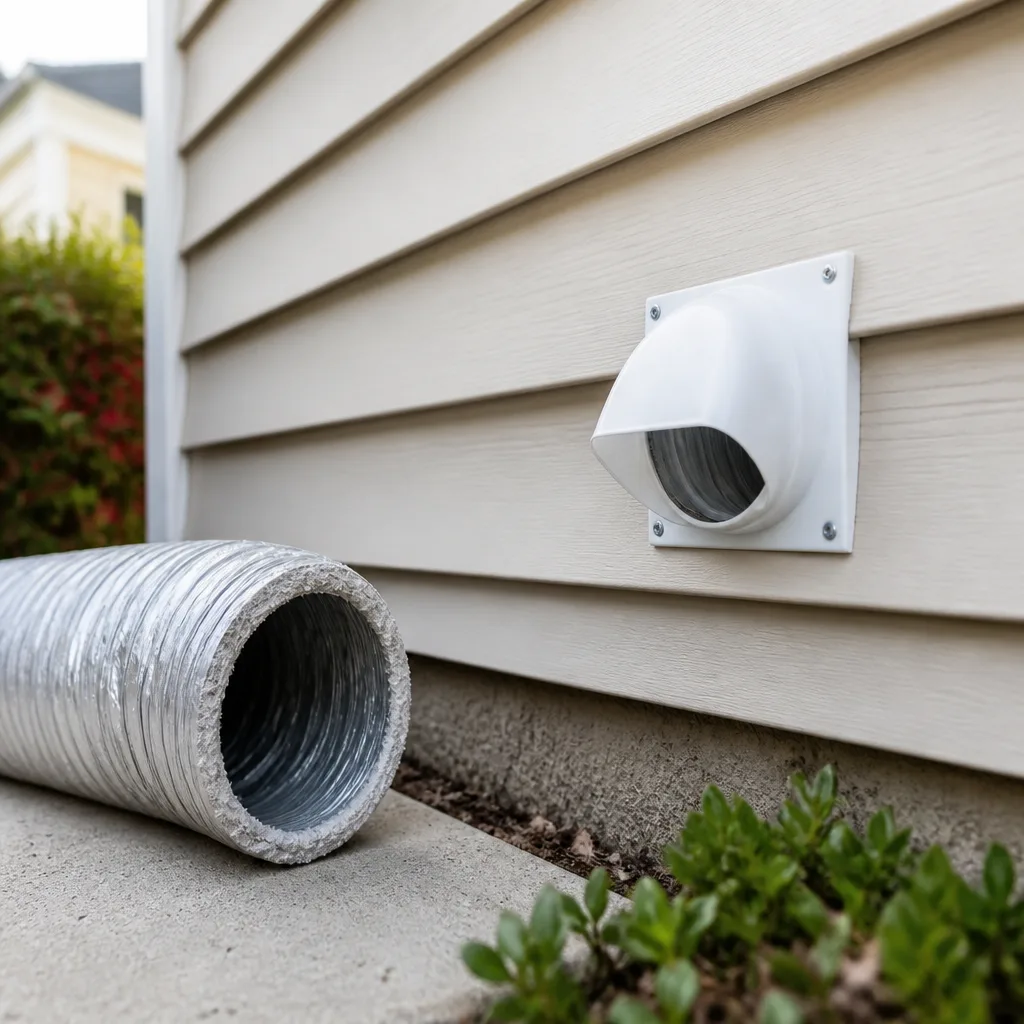 Dryer vent cleaning
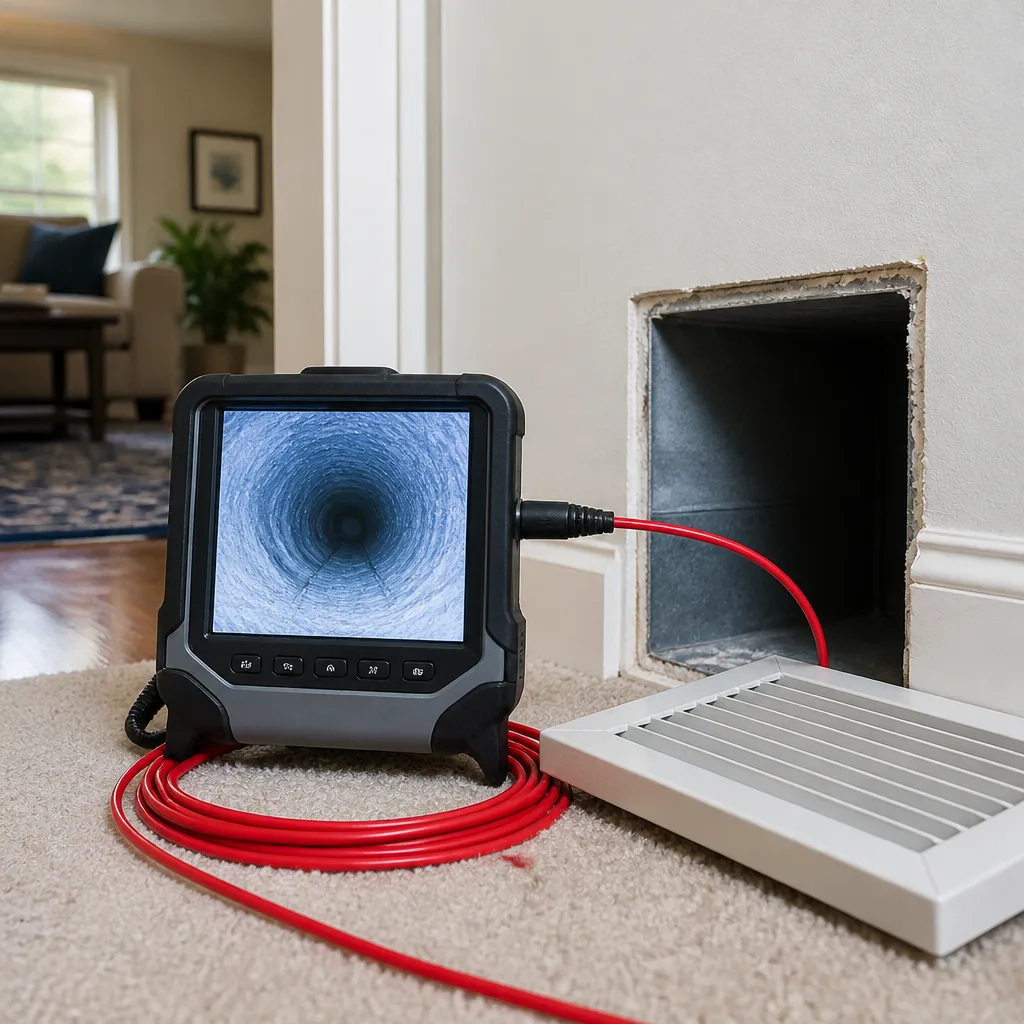 Camera inspection
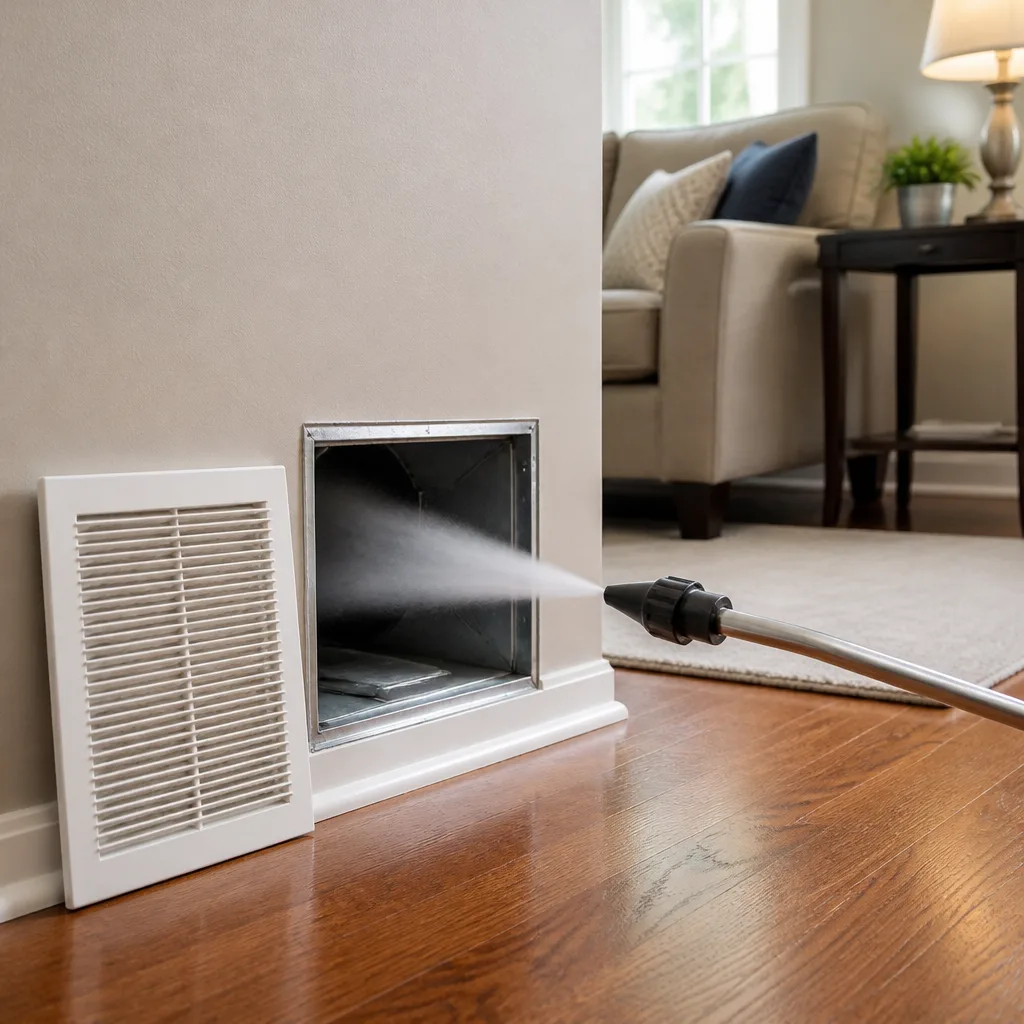 Sanitizing & deodorizing
Whole-system duct and dryer vent check with before-and-after photos - you see exactly what came out of your vents
That "$99 whole-house special" is a bait ad - the real number appears once they are in your hallway, or the "clean" is a shop-vac at the register. We photograph the inside of your ducts before and after instead.
DIY vs Professional Air Duct Cleaning: The Oklahoma City Homeowner’s Decision Guide
A $30 dryer vent brush and a good filter aren’t duct cleaning. They’re also not nothing. Most of the advice you’ll read on this topic splits into two useless camps: YouTube videos that hand you a drill-mounted brush and a shop vac, and duct-cleaning companies that insist every homeowner is one dirty vent away from a respiratory crisis. The honest answer sits in the middle, and it’s more specific than either side admits. Some limited duct maintenance genuinely belongs to you. Source-removal cleaning does not, and it can’t be faked. This guide separates the two, explains the physics of why consumer tools can’t do the job, and gives you a decision framework you can actually use. We’ll cover what’s worth doing yourself in Oklahoma City, what isn’t, and how to tell which situation you’re in.
Quick Answer
You can and should handle filter changes, supply and return grille cleaning, and airflow checks yourself. You should not attempt source-removal cleaning of your ducts. Consumer shop vacs and retail brushes can’t generate the negative pressure required to pull settled debris out of the system, and using them can push contamination into your air handler rather than out of the house. If your goal is routine maintenance, DIY covers a lot. If your goal is removing contamination after a renovation, a water event, a home purchase, or a pest problem, it requires professional equipment and containment.
Styles & brands we work with
- Whole-home duct cleaning
- Dryer vent cleaning
- Camera inspection
- Sanitizing & deodorizing
Table of Contents
- Why consumer shop vacs and retail brushes can’t clean ducts
- What DIY maintenance actually covers
- When a DIY attempt makes contamination worse
- What professional equipment does differently
- Oklahoma City: dust, wind, and the specific reasons your ducts load up
- The decision framework: maintenance vs source removal
- The duct repair gap: why cleaning without sealing misses the point
- The dryer vent: where DIY and fire risk intersect
Why consumer shop vacs and retail brushes can’t clean ducts
The difference between a shop vac and a professional duct cleaning system isn’t power. It’s a different category of machine. A typical consumer wet/dry vacuum moves something in the neighborhood of 100 to 200 CFM at the hose, with static pressure ratings so low they barely register on the gauges we use in the field. A rotary-brush HEPA-vacuum system built for residential and commercial ductwork moves many times that volume and pulls against substantial static pressure through long hose runs, which is what you need once debris has to travel the length of a trunk line to reach the collection point.
Volume is only half of it. The other half is negative pressure at the source. To remove settled dust from inside a duct, you must create a pressure differential that keeps the debris airborne long enough to move it toward the vacuum, not toward the rest of the house. That means sealing the system at the correct points, holding negative pressure throughout the cleaning, and agitating the duct walls at the same time. A shop vac dropped into a floor register does none of those things. The best case is that it picks up loose debris near the opening. The realistic case is that it stirs up settled dust and redistributes it through the supply branches while you work.
There’s a second issue: agitation. Dust in ductwork isn’t a pile of sand. It’s adhered to the galvanized steel, and in humid months in Oklahoma City, some of it cements onto the surface. A rotary brush system turns at speed inside the duct, with whip lines and contact heads that scrape the walls while the vacuum pulls. Handheld brushes on a 6-foot rod don’t make contact with the full circumference of the duct, can’t reach beyond the first bend, and can’t stay in motion long enough against a suction field that doesn’t exist. The physics won’t work, no matter how long you scrub.
What DIY maintenance actually covers
Here’s the part the industry glosses over: there’s real maintenance that belongs in a homeowner’s hands. It’s not cleaning the inside of your ducts. It’s everything around them.
What you can and should do yourself:
- Change the filter on schedule. A clean filter is the single most effective thing you can do for air quality and system efficiency. In Oklahoma City, with our dust and seasonal pollen load, that usually means checking monthly and replacing every one to three months depending on the filter rating and how the system runs. A clogged filter starves the air handler and drives up static pressure, which stresses the blower and reduces airflow at the registers.
- Clean the supply and return grilles. Grilles collect dust on the fins and behind the faceplate. A damp cloth and a few minutes per grille keeps visible dust down and stops you from mistaking grille dust for duct dust.
- Inspect the return air box. Look inside the return box for pooled dust, pest evidence, or moisture staining. If you find any of those, that’s a signal worth escalating.
- Check register airflow with a tissue or a cheap anemometer. Hold a tissue to each supply register and note whether any are noticeably weaker than others. A weak register is often a sign of a disconnected or crushed duct branch, not a dirty one, and that’s a repair problem, not a cleaning problem.
- Keep return paths clear. Furniture and rugs blocking return grilles cause the system to pull from where it can, which accelerates dust deposition in the branches.
That list covers routine maintenance. What it doesn’t cover is cleaning the interior of a duct or trunk line. Those are two different jobs, and treating “I changed my filter” as “my ducts are clean” is the mistake. Filters remove particles from the air passing through them, not from the duct surfaces downstream.
When a DIY attempt makes contamination worse
We’ve seen this go badly in predictable ways. Three scenarios come up most often, and each of them has a real consequence for the homeowner.
Disturbing biological growth without containment. If there’s visible growth inside a grille or on a diffuser, it doesn’t matter whether it’s inside the duct or sitting on the face of the grille. What matters is what happens when you agitate it. Biological growth becomes a problem when it becomes airborne. A shop vac without HEPA filtration blows fine particles back into the room through its exhaust, and a hand brush sends the debris into whatever is downstream. Professional containment uses negative air pressure and HEPA filtration so the disturbed material gets captured, not distributed.
Pushing debris into the air handler. A vacuum on one end of a duct doesn’t automatically pull debris toward it. If you clean one supply branch at a time with a shop vac, you can move debris toward the trunk and into the evaporator coil and blower assembly, which is the most expensive place in the system for dust to land. Coil cleaning is a separate, more specialized service, and a dirty coil carries an efficiency cost that shows up on your electric bill in July in Oklahoma City.
Masking a moisture problem. If a duct is musty or the grille has staining, that’s usually condensation, a duct running through hot attic space, or a leak. Cleaning the visible dust on the grille can hide the symptom long enough that the underlying moisture problem grows into a bigger job. The honest answer to a musty duct is diagnosis first, cleaning second.
There’s one more case worth flagging. If you’ve had a renovation in a home that was built before the mid-1970s, and you don’t know what’s in the air, agitating it is the wrong move. The safest course is to have the system inspected before anything is disturbed. Ask your contractor what they found, and have a trained professional evaluate before cleaning.
What professional equipment does differently
When we describe our equipment, it’s not to be impressive. It’s because the equipment is what makes source-removal cleaning possible. Here’s what’s actually different.
Truck-mount vacuum rating and maximum airflow
A rotary-brush HEPA-vacuum system like the Nikro units we run is built to pull against long hose runs and high static pressure. That’s what creates and holds the negative pressure required to keep the system sealed and moving in one direction while the cleaning is in progress. The CFM numbers in the manufacturer specs run in the range commercial and remediation teams work with, and the units are paired with HEPA filtration so the collected dust leaves the house rather than recirculating in it.
Rotary brush agitation
The Rotobrush system uses a driven rotary brush on a flexible shaft to reach into the duct from the register openings, agitating adhered dust from the duct walls while the vacuum pulls. It reaches the branch runs and trunk lines, and it stays in contact with the full surface rather than just the visible underside of a duct.
Camera inspection
We use inspection cameras to look inside ductwork before and after cleaning. It’s how the before-and-after photos we show clients get taken, and it’s how we confirm that a branch is actually clean instead of guessing based on how the register looks from the room.
Containment and air-quality components
On larger jobs and in remediation contexts, negative-air containment with HEPA filtration – the kind of setup Abatement Technologies makes for restoration crews – keeps dust from spreading into occupied rooms. On the air-quality side, working with Honeywell and Aprilaire components means we can address filtration and air-handler accessories as part of the visit, not just clean the metal and leave.
To see how that equipment fits into a full residential cleaning, take a look at our air duct cleaning page. The caliber of equipment is the reason the two jobs – DIY maintenance and source-removal cleaning – are different categories, not different price tiers of the same thing.
Oklahoma City: dust, wind, and the specific reasons your ducts load up
Ducts in Oklahoma City get dirtier faster than in many parts of the country, and it’s worth understanding why. It’s not a mysterious local curse. It’s geography and weather.
The prevailing winds out of the south and southwest carry a real dust load across the metro, especially through the spring and summer. That dust comes in through open doors and windows, finds its way into the return air system, and settles wherever flow is slow. Homes with a lot of filter-change discipline still pick up fine particulate in the return plenum, because filters are rated to trap particles in a size range, not all of them. If you’re in the path of a recent construction project, a new subdivision going up nearby, or a highway expansion, that particulate load goes up further.
Spring in Oklahoma City brings pollen. If you or someone in the house has seasonal allergies, the difference between a system carrying pollen through the summer and a system with cleaner ducts and better filtration makes a difference to how the house feels. That doesn’t mean cleaning fixes allergies – it doesn’t, and no honest duct cleaner will tell you it does. It means the dust and pollen in the system are part of the load, and reducing them reduces the load.
The other local factor is the age and mix of housing stock across the metro. Newer builds in areas like Edmond, Yukon, and Moore often have flexible duct runs and tighter returns, which makes an airflow check more useful than a dust check. Older neighborhoods closer to the urban core often have original galvanized trunk lines that have been through several renovations, and those remodels are frequently the source of the debris you’ll find. A kitchen remodel without return-air protection will load a section of duct with drywall dust and construction dust in a way that’s easy to miss until the system has been running for a while.
If you’re looking for a broader view of the metro and where we work, our Oklahoma City page covers it. For a deeper breakdown of a specific concern, the Shoreline Duct Cleaning home page is the right starting point.
The decision framework: maintenance vs source removal
The single most useful question isn’t “DIY or professional?” It’s “is this routine maintenance, or is this source removal?” Those are two different jobs, and they map cleanly to different owners.
Source removal is the goal when contamination has been deposited by a specific event or condition. That includes:
- A recent renovation, remodel, or new construction near the return air path
- A home purchase where the prior owner’s maintenance is unknown
- Water intrusion, a roof leak, or an AC condensate problem affecting the system
- A pest issue where debris or droppings have been found in the ducts
- Visible debris, musty odors, or dust trails at the registers that returns after cleaning the grilles
- Persistent allergy symptoms indoors that aren’t explained by other sources
If any of those sound like your situation, the answer is professional. It’s not close, and it’s not a matter of budget. Source removal requires the equipment described above.
Routine maintenance belongs to you. If your goal is keeping the system as clean as it can reasonably be between professional visits, the homeowner-side list in this guide covers it, and that’s most of the year-to-year work.
A decision checklist you can run in five minutes
- Check the filter. If it’s dirty, replace it before you do anything else. That’s step one, no exceptions.
- Walk the house and clean the supply and return grilles with a damp cloth.
- Hold a tissue to each supply register. Note any that are noticeably weak.
- Look inside the return box with a flashlight for dust trails, staining, or pest evidence.
- Ask yourself: has anything happened to the house in the last three years that put debris into the air? Renovation, water, roof work, pest issue, new build nearby, home purchase?
- If the answer to step 5 is yes and the return box or registers show signs of it, that’s professional territory. If the answer is no and everything looks routine, DIY maintenance covers you until the next professional visit is due.
That framework won’t get you an exact answer every time. It will keep you from spending a weekend brushing dust into your air handler, which is the outcome that costs the most.
The duct repair gap: why cleaning without sealing misses the point
Something most homeowners don’t hear until the camera goes into the duct: a lot of “dirty ducts” are actually “leaking ducts.” The dust is real, but the reason it’s there is that the system has a disconnected branch, a crushed flex run, a failed mastic joint, or a gap where the duct passes through a chase. Cleaning a leaking system without addressing the leak means the professional’s work gets undone by the same air the source-removal took out.
That’s a category of service most duct-cleaning-only companies can’t handle. Cleaning, finding a problem, and then telling the homeowner to call a separate contractor to fix it leaves a gap between the cleaning and the repair, and the gap is where the dust comes back. We offer air duct repair as a standalone service specifically because the findings during a cleaning call are the right time to correct them. When the camera shows a crushed section or a disconnected branch, we can fix it in the same visit instead of leaving it for another contractor and another week of the system pulling from the wrong place.
This matters in Oklahoma City for a reason worth naming. Flexible duct in attic space here sees real temperature swings, and the connections at the plenum and at the takeoffs from the trunk are where those failures show up. A crushed or separated branch is common in older installs, and it’s often a slow leak rather than a dramatic failure. You won’t hear it. You’ll see it on the bill, on the weak register, or on the dust in the room the branch is supposed to be serving. “We clean the system, then we confirm it’s sealed” is the phrase we use for that work, and it’s the reason the repair service exists as a separate offering rather than as an upsell.
The dryer vent: where DIY and fire risk intersect
Dryer vent cleaning isn’t an add-on to the duct work. It’s a separate service with a separate job, and it’s the one place where the DIY question has a safety dimension that the air-duct question doesn’t. Lint accumulation in a dryer vent is a leading cause of residential fires, and that’s not a figure a homeowner should try to manage by feel.
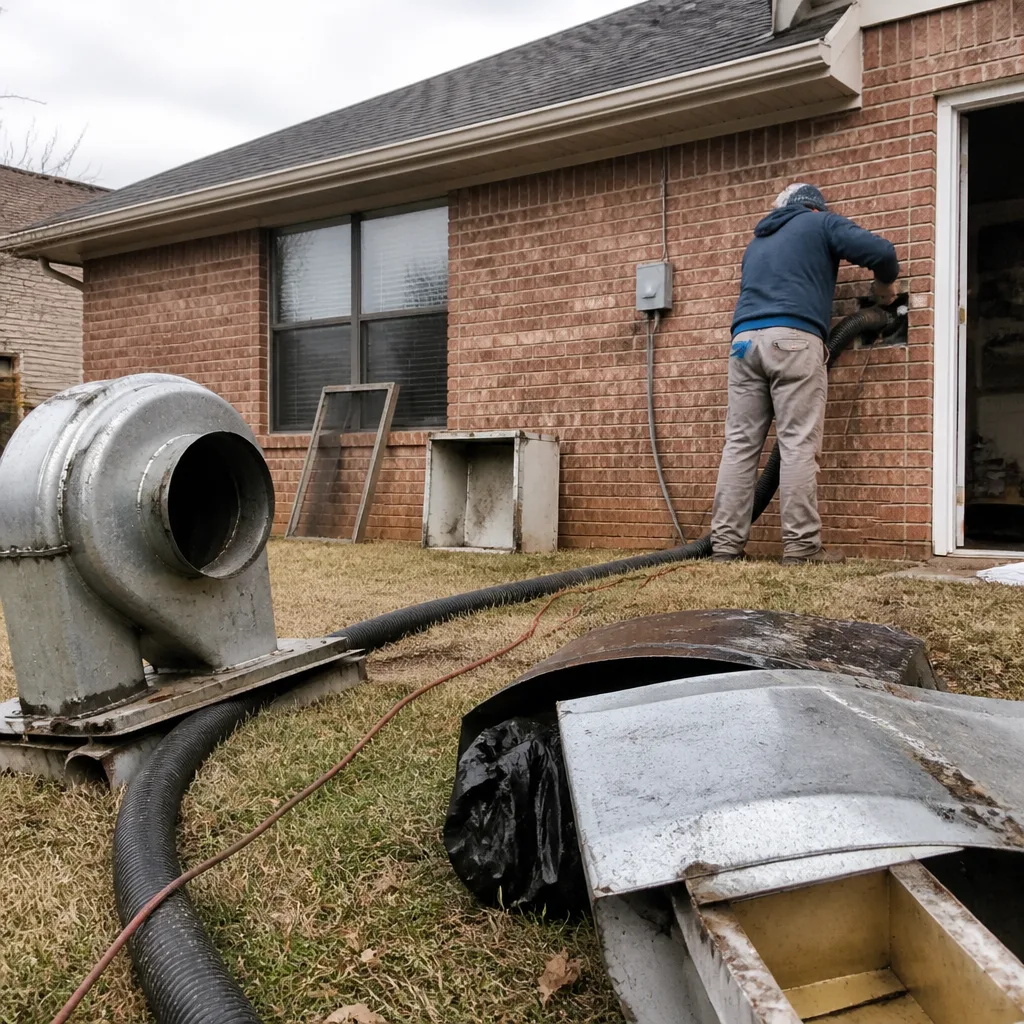
There’s overlap between the two jobs in the way the equipment works: the same rotary brush and HEPA-vacuum approach that cleans a duct run can clean a dryer vent run, with the same attention to the full length of the run rather than just the visible section behind the dryer. What’s different is the stakes. A clogged duct costs you efficiency and air quality. A clogged dryer vent is a fire hazard, and the run that matters most is often the part you can’t see – the transition from the dryer to the wall, the run inside the wall, and the exterior termination.
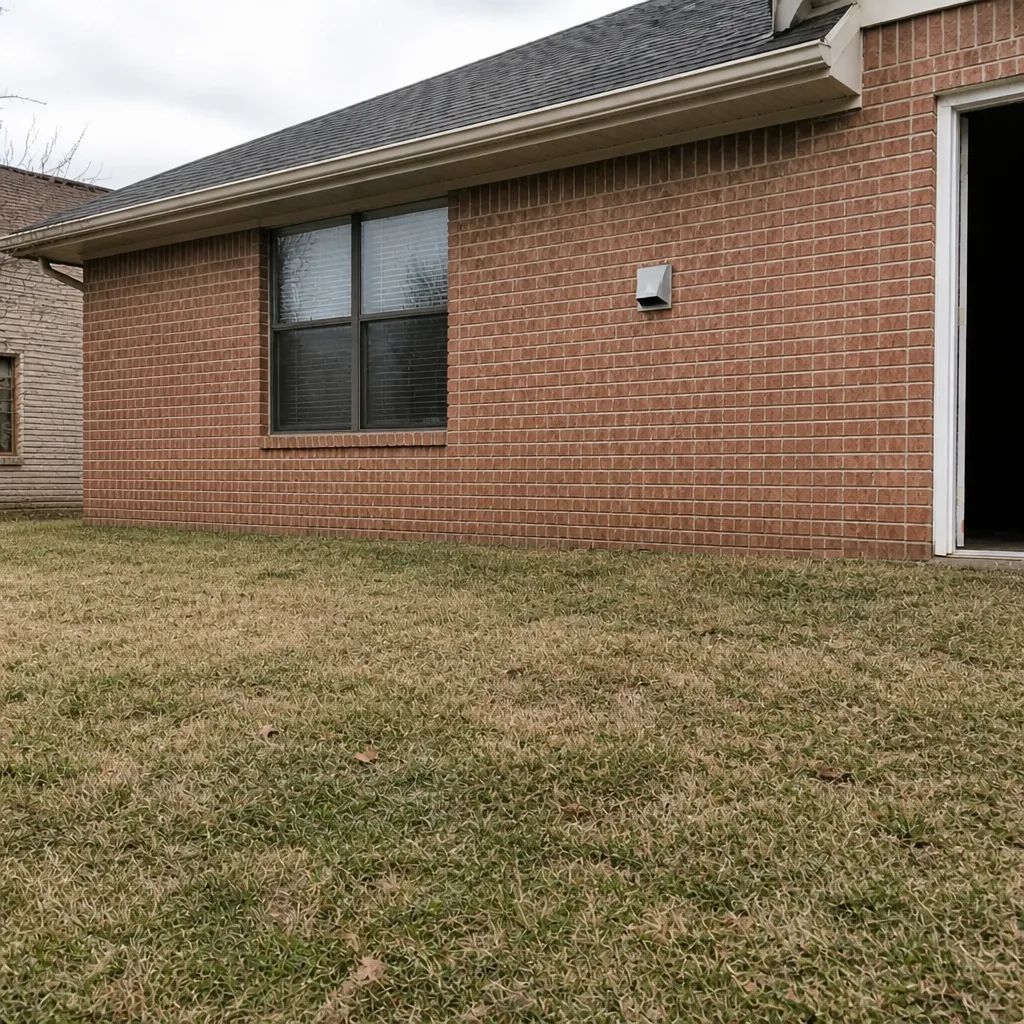
What you can do yourself: clear the lint trap every cycle, check the flexible transition behind the dryer for kinks or crushing, and look at the exterior termination flap to confirm it opens freely when the dryer runs. What requires equipment and a full-length brush: the run inside the wall and the full length of the vent to the exterior.
Our separate dryer vent cleaning service uses the same systematic approach we apply to HVAC ductwork. If your last dryer vent cleaning is more than a year ago, or you’re not sure it’s ever been done, that’s a call worth making on its own merits, not as part of a duct cleaning.
Common Mistakes to Avoid
- Using a shop vac on a supply register and calling it cleaning. It doesn’t remove settled debris from the duct run, and it can push some of it into the coil or the blower. If the goal is source removal, this is the wrong tool.
- Cleaning only the grilles and assuming the ducts are clean. Grille dust is a separate maintenance item from duct dust. Cleaning grilles is worth doing, but it doesn’t touch what’s in the branch runs.
- Skipping the filter change to save a few dollars. In central Oklahoma’s dust load, a clogged filter is the most common cause of reduced airflow and unnecessary strain on the blower. Replace it on schedule; it’s the cheapest air-quality improvement in the house.
- Disturbing visible growth on a grille or diffuser without containment. If there’s staining or growth at a register and you’re not sure what it is, don’t brush it. Have it evaluated first.
- Ignoring a musty smell as “just how the house smells.” Musty air from a duct is often a moisture problem, and cleaning the symptom without finding the source leaves the cause in place.
- Booking a duct cleaning without asking about duct repair capability. If the company can’t fix what it finds, the cleaning may not last. Ask up front whether repair is in scope.
- Treating a dryer vent as part of “duct cleaning” and letting it slide. The dryer vent has a separate fire-safety function and deserves its own service schedule. If it hasn’t been cleaned in over a year, that’s the priority.
See the difference
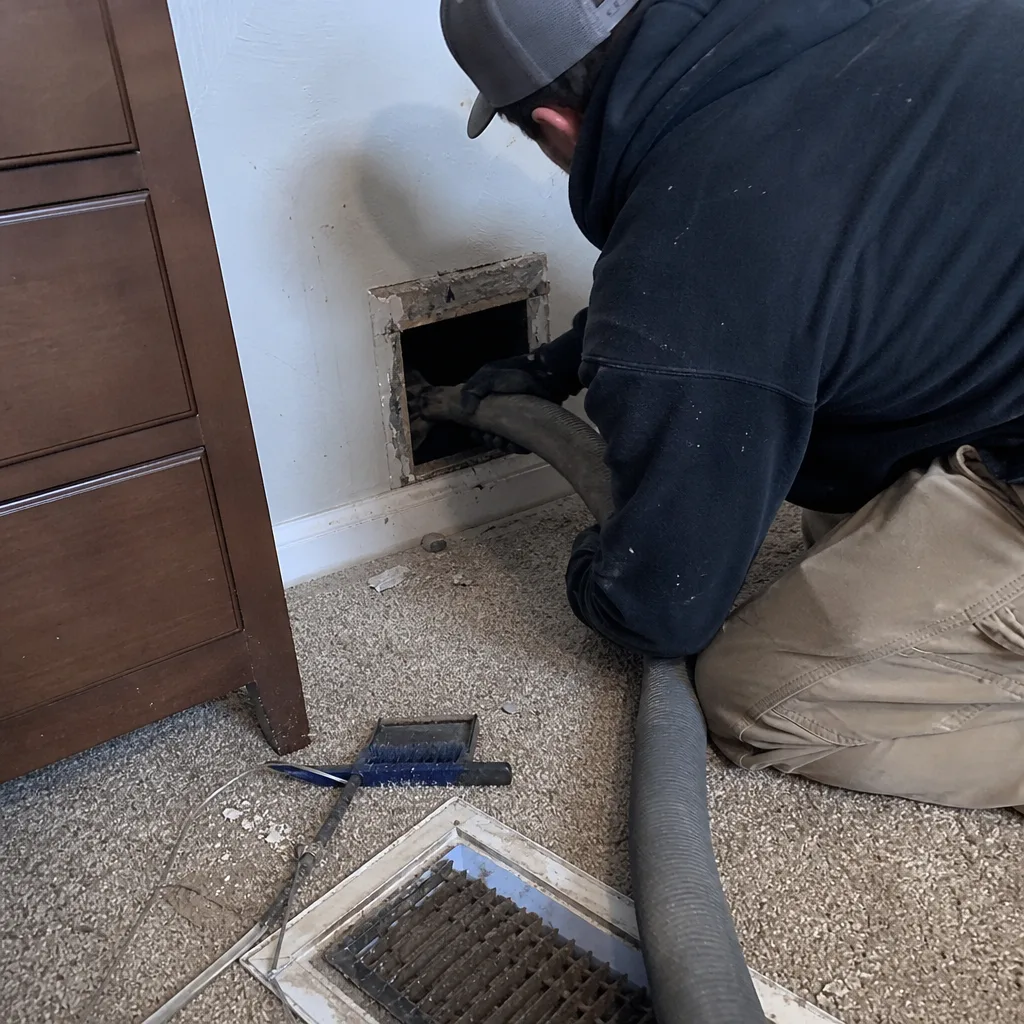 Before
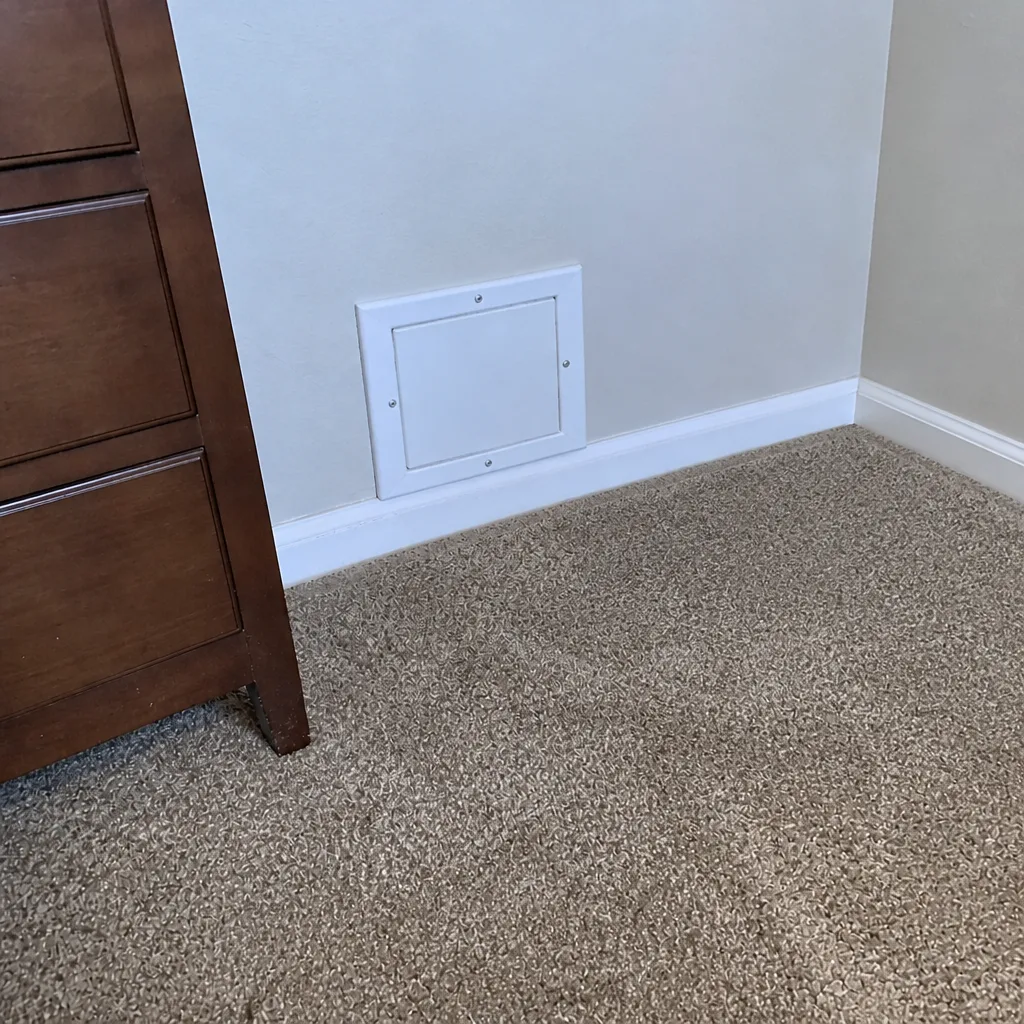 After
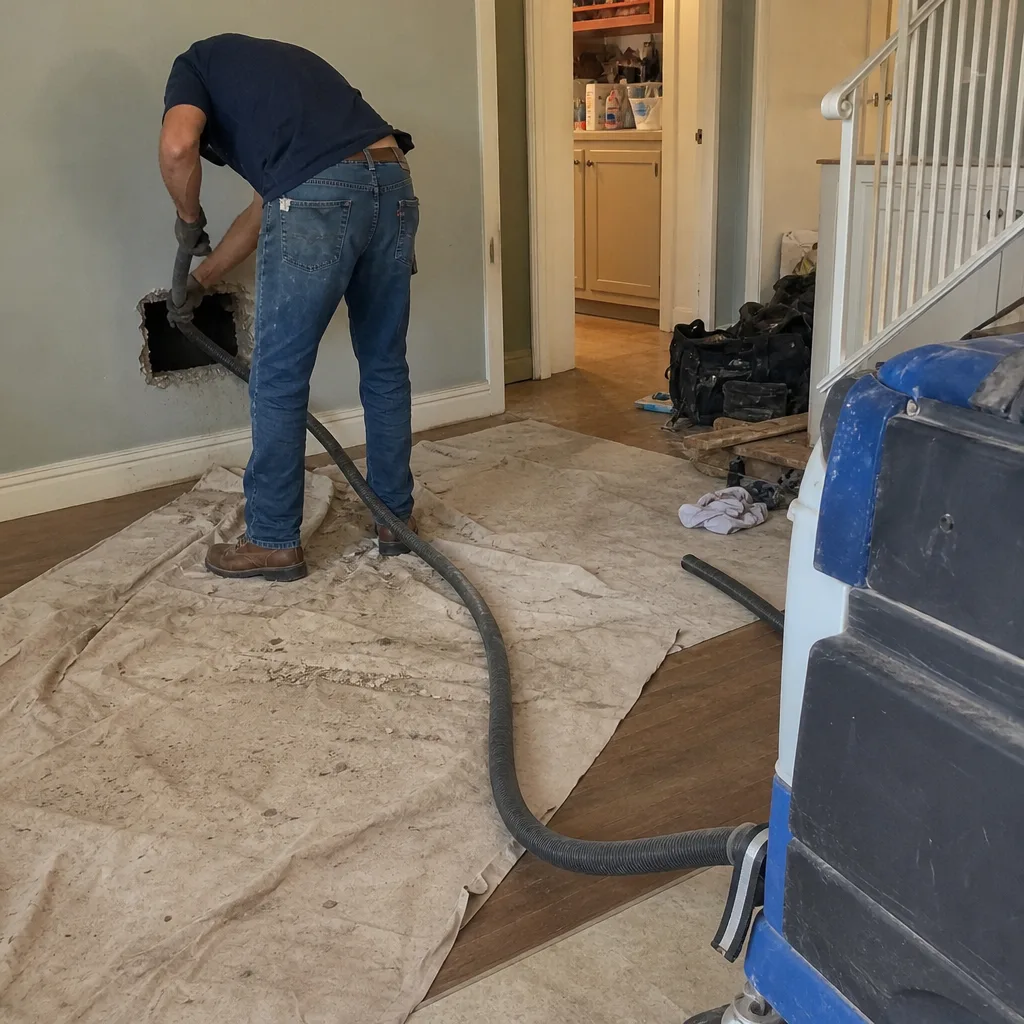 Before
 After
 Before
 After
When to Call a Professional
Call a professional when contamination was deposited by a specific event: a renovation, a water intrusion, a pest issue, a recent home purchase where the maintenance history is unknown, or visible debris and odors that return after grille cleaning. Call if the camera would tell you something you can’t see from the room – meaning a leaky or disconnected branch is on the table. And call if your dryer vent hasn’t been cleaned in over a year, because that’s a fire-safety service, not an air-quality one.
Our technicians have up to experience and work with Rotobrush and Nikro systems, Abatement Technologies components, and Honeywell and Aprilaire air-quality products. Shoreline Duct Cleaning offers free estimates in Oklahoma City. Call (855) 360-8688. We answer 24/7. Fast dispatch from 7am to 7pm, Sunday through Friday. The written estimate sets the final price, and it’s agreed before any work starts.
Frequently Asked Questions
Yes, for routine maintenance only. Filter changes, grille cleaning, return-box inspection, and airflow checks are all legitimate homeowner tasks and genuinely help. What DIY doesn’t cover is source removal of contamination from inside the duct runs. Consumer shop vacs and retail brushes can’t generate the negative pressure or agitation needed for that, and using them can push debris into the air handler. Call (855) 360-8688 for an exact quote on a professional cleaning – estimates are free.
No, not in any meaningful sense. A consumer wet/dry vacuum moves far less air at far lower static pressure than a rotary-brush HEPA system, and it can’t seal the system or hold negative pressure while you work. The result is a mix of light surface pickup near the opening and redistribution of dust into the branch runs. Call (855) 360-8688 if you want the system cleaned properly – estimates are free and the price is set per job by the written estimate.
Most homes don’t need annual duct cleaning. The honest answer is that routine filter and grille maintenance plus a professional cleaning when there’s a specific event – renovation, water intrusion, pest issue, or new home purchase where the history is unknown – serves most Oklahoma City homeowners well. Homes with pets, allergy concerns, or a lot of nearby construction may want a shorter interval. Call (855) 360-8688 and we’ll help you figure out yours – estimates are free.
Cheap quotes usually price a surface pass rather than source removal. They skip the vacuum rating and containment setup, sometimes skip the camera inspection, and don’t include duct repair findings within the scope. The cost is lower because the job is smaller. Our pricing is one flat price per system, agreed in writing before work starts, with before-and-after photos of the ductwork so you can see what was done. Call (855) 360-8688 for an exact quote.
Ask for before-and-after photos taken inside the ductwork. That’s what the inspection camera is for. We show clients their own ducts, not stock photos, and the picture before and after the cleaning is the most direct verification available. If a company won’t show you the inside of your ductwork before and after, that’s a signal. Call (855) 360-8688 to schedule a cleaning with the photos included – estimates are free.
That’s a common finding on camera in Oklahoma City homes, especially in attic runs and at plenum connections. Duct repair is one of our three core services, so the finding can be corrected during the same visit rather than referring you to another contractor. Cleaning a leaking system without sealing it means the leak keeps pulling dust into the system. Call (855) 360-8688 and we’ll walk you through what a repair quote looks like – estimates are free.
The Bottom Line
DIY and professional duct cleaning aren’t competing options. They’re two different jobs that happen to share a conversation. The homeowner belongs in the routine maintenance cycle: filter changes, grille cleaning, return-box inspection, register airflow checks, and clearing a dryer vent’s visible transition. That work is real and it matters. The homeowner doesn’t belong inside the duct runs, because the tools required to remove settled debris without pushing it into the coil aren’t available at a hardware store. Source removal after a renovation, a moisture event, a pest problem, or a home purchase requires the professional equipment described here, and a duct repair capability behind it. Decide which job you’re looking at, and the “DIY vs. pro” question mostly answers itself. Our technicians have up to experience, and we work with Rotobrush, Nikro, Abatement Technologies, Honeywell, and Aprilaire equipment on Oklahoma City systems of every age and configuration.
Call (855) 360-8688 for a free estimate. We answer 24/7. Fast dispatch from 7am to 7pm, Sunday through Friday. We’ll walk the system with a camera, show you what’s actually there, and quote a flat price per system in writing before any work starts.
Written by the team at Shoreline Duct Cleaning.