
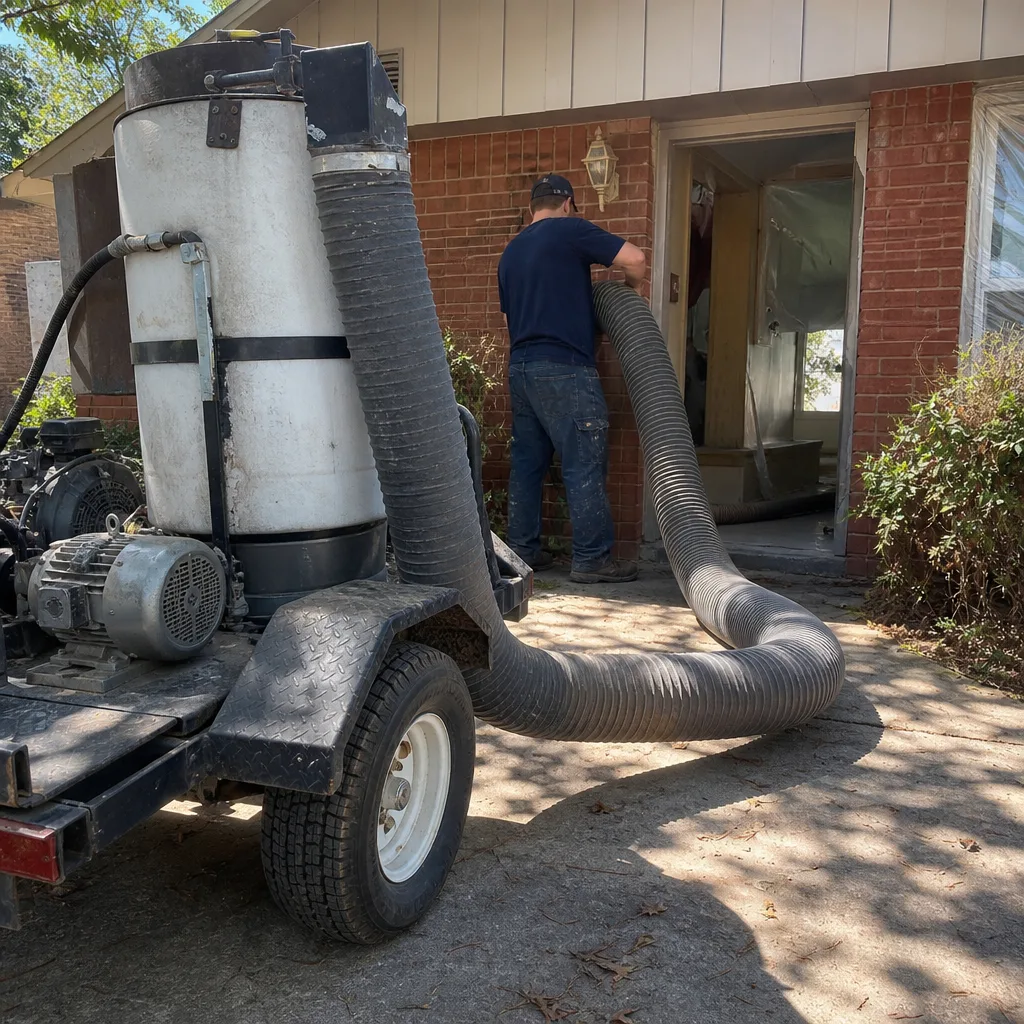
Last updated November 15, 2026
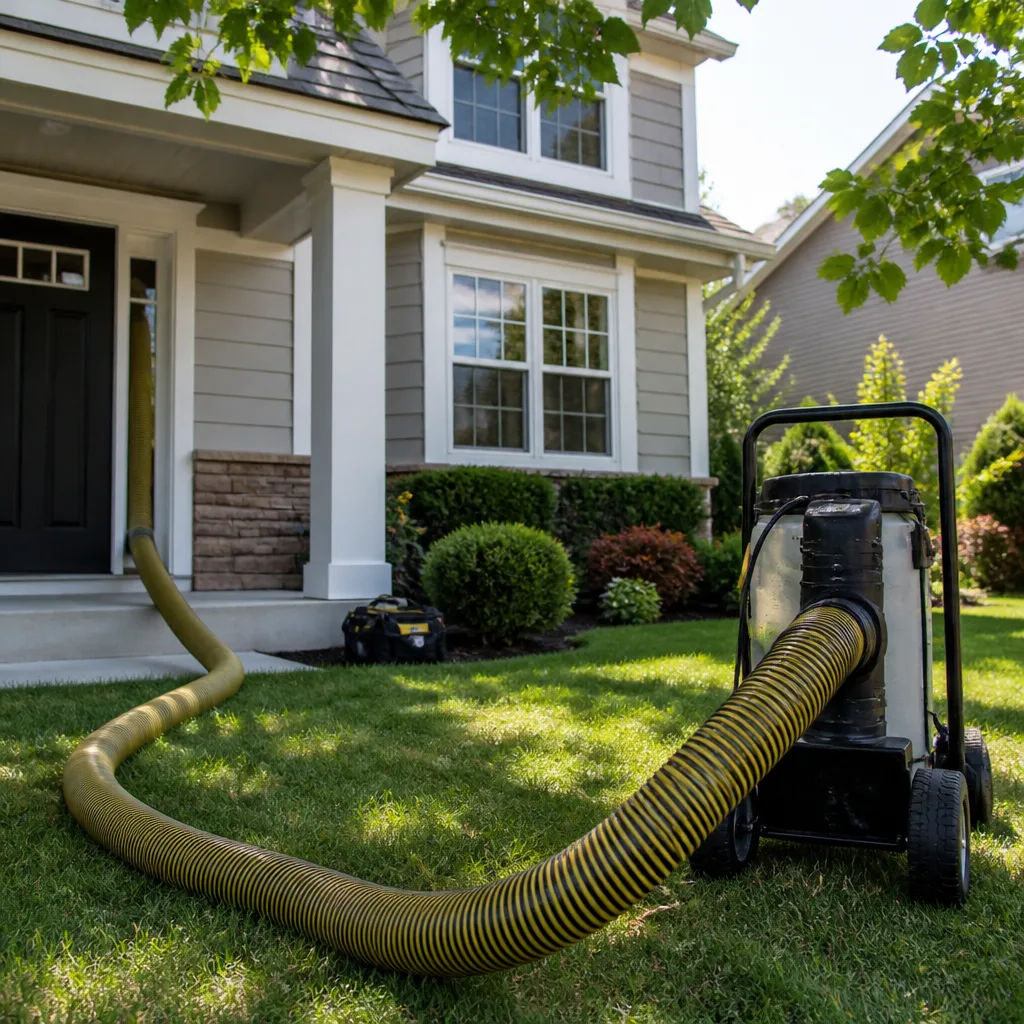 Whole-home duct cleaning
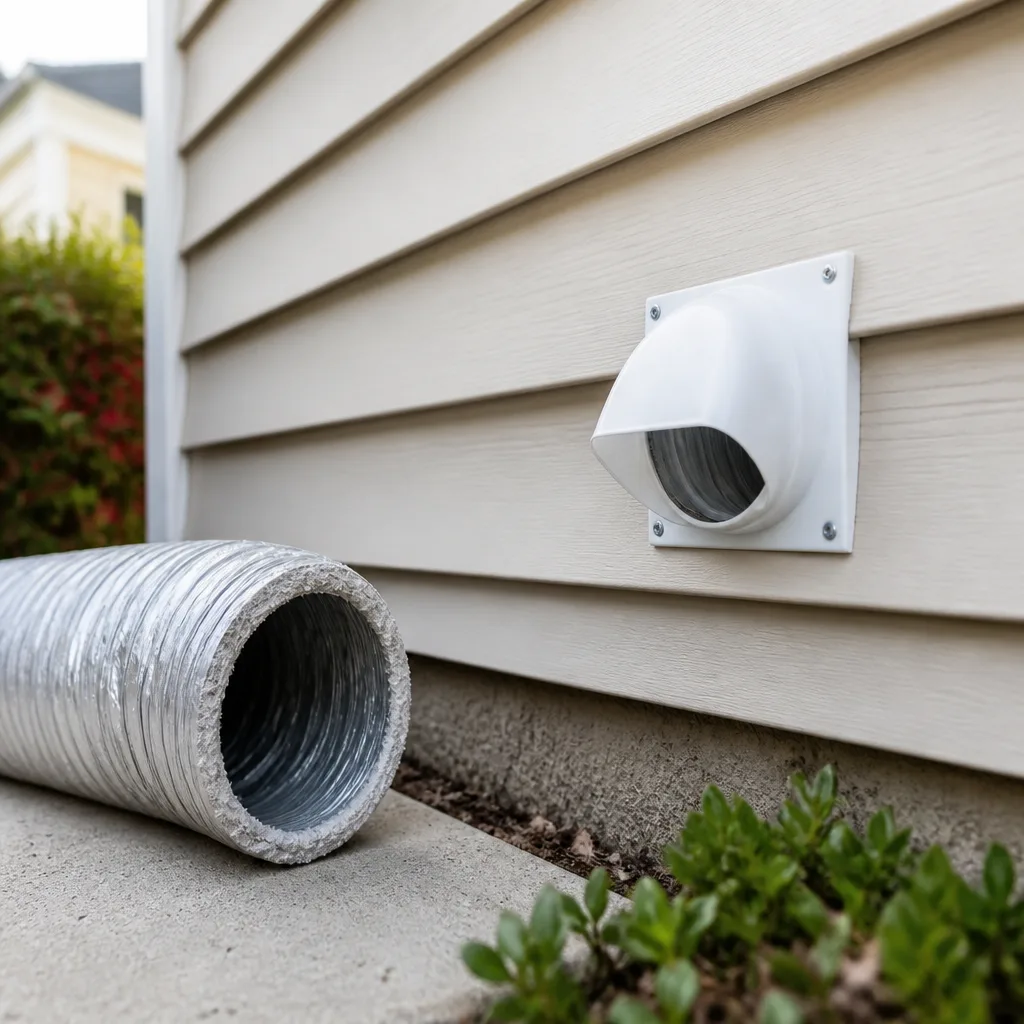 Dryer vent cleaning
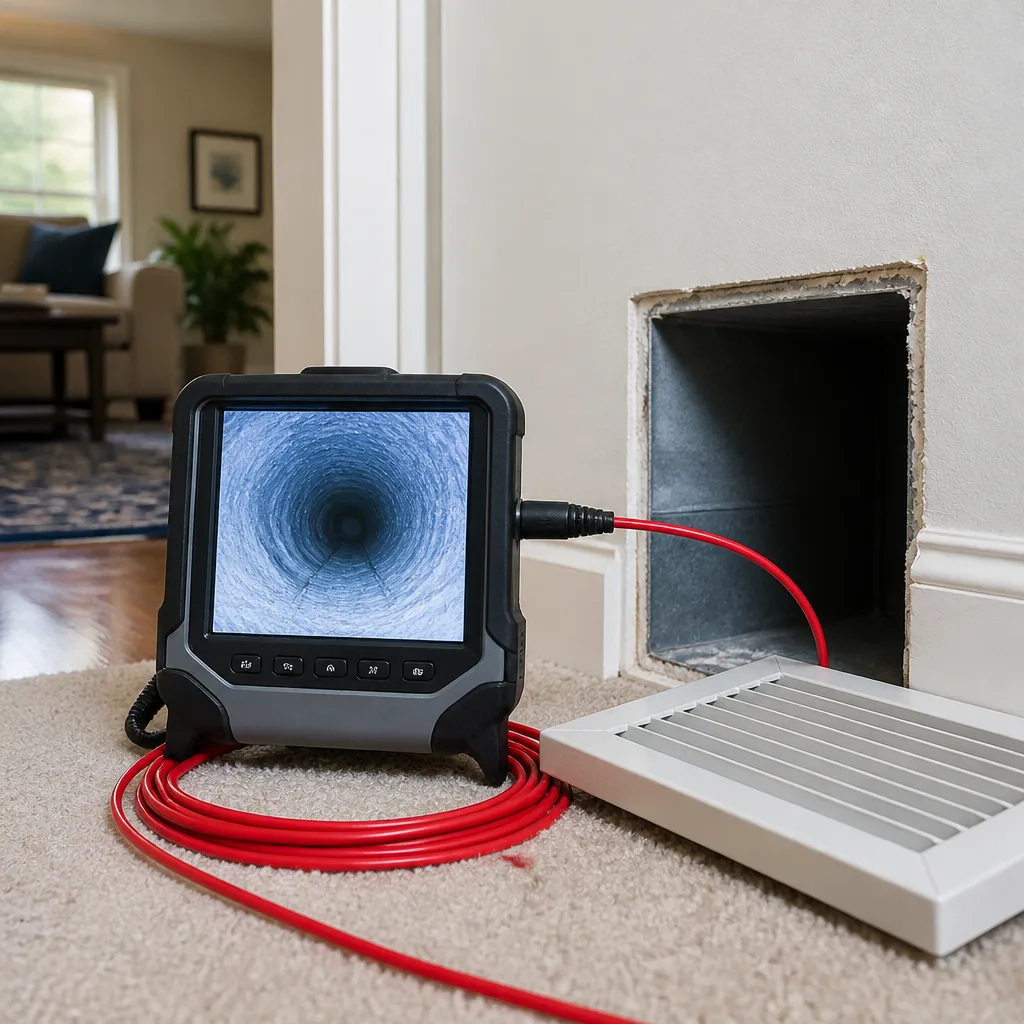 Camera inspection
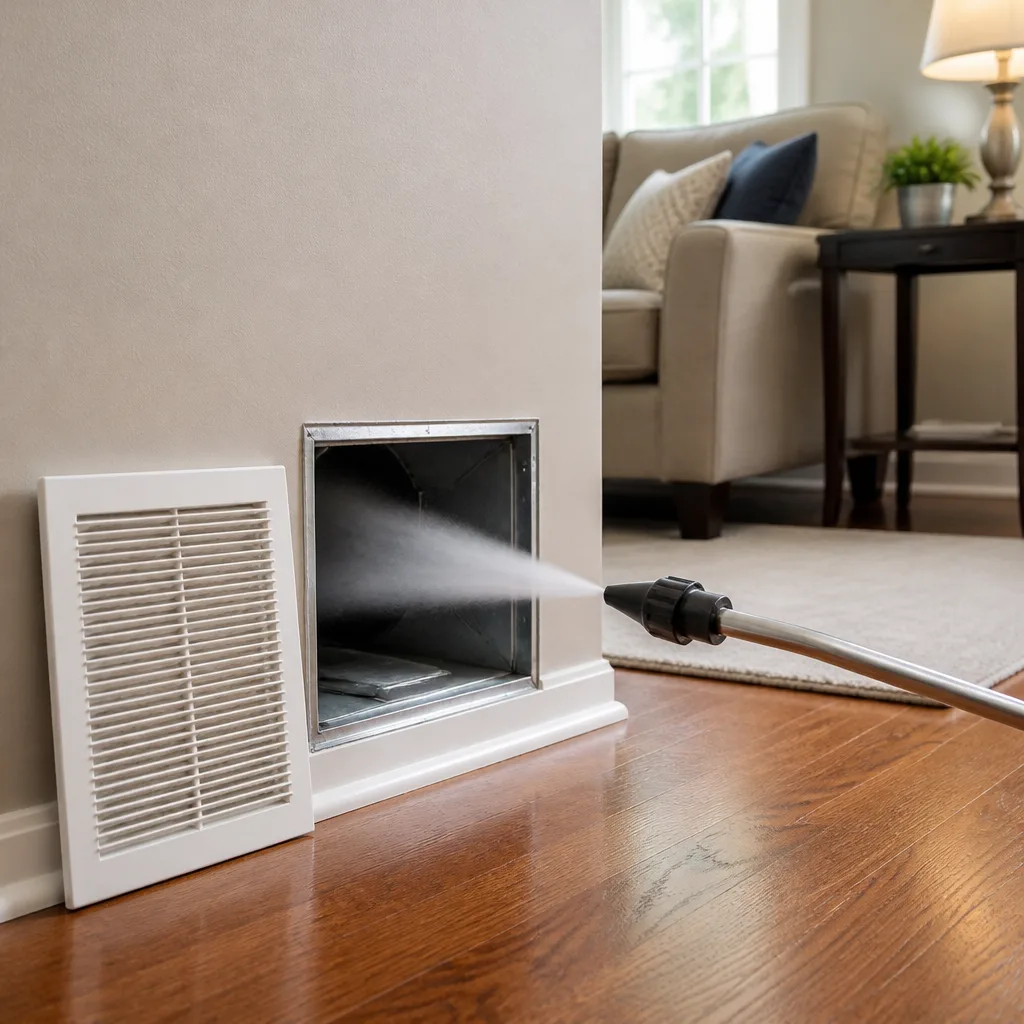 Sanitizing & deodorizing
Whole-system duct and dryer vent check with before-and-after photos - you see exactly what came out of your vents
That "$99 whole-house special" is a bait ad - the real number appears once they are in your hallway, or the "clean" is a shop-vac at the register. We photograph the inside of your ducts before and after instead.
Air Duct Cleaning Emergency Preparedness Guide for Oklahoma City Homes
Most Oklahoma City homeowners know the drill when the sirens sound: get to the shelter, grab the go-bag, wait for the all-clear. What almost nobody plans for is what happens inside the ductwork during and after the storm. A tornado can pass within a mile, leave your roof and siding intact, and still push insulation fibers, fine soil, and outdoor debris deep into your return system through pressure changes and small gaps. Your house looks fine. Your air doesn’t have to be.
This guide covers what to do before, during, and after the weather events Oklahoma City actually gets – tornadoes, flash flooding, and wildfire smoke – so your duct system doesn’t become the thing that keeps recontaminating your home while you focus on structural repairs.
Quick Answer
After a tornado, flood, or heavy smoke event in Oklahoma City, have your duct system inspected and cleaned before you run the HVAC normally – even if the house shows no visible damage. Pressure differentials and filter bypass pull outdoor contaminants into return ducts, and standard filters don’t capture everything. Get a free estimate from Shoreline Duct Cleaning at (855) 360-8688 before the next system runs a full cycle.
Styles & brands we work with
- Whole-home duct cleaning
- Dryer vent cleaning
- Camera inspection
- Sanitizing & deodorizing
Table of Contents
- Why Storm Events Hit Your Ductwork Even Without Visible Damage
- Tornado-Adjacent Pressure Events: What Gets Forced Into Your Return System
- Wildfire Smoke Preparedness for Duct Systems
- Post-Flood Protocol: Any Standing Water Means Contamination
- Documenting Duct System Condition for Insurance Claims
- Building a Pre-Event Baseline Before Storm Season
- How Much Does Air Duct Cleaning Cost in Oklahoma City?
- When to Call a Professional vs. What You Can Check Yourself
Why Storm Events Hit Your Ductwork Even Without Visible Damage
Your duct system is not a sealed vessel. It’s a network of joints, seams, elbows, takeoffs, and penetrations through walls, ceilings, and the floor assembly. Every one of those connections has small gaps. Under normal air pressure, those gaps don’t matter much – the system runs at low static pressure and the leaks go unnoticed.
A tornado changes the pressure field around your home in seconds. The atmospheric pressure drop associated with a passing tornado creates a pressure differential between the inside of your house and the outside air. When that difference reverses and spikes, your house does what any pressure vessel does – it equalizes through the paths of least resistance. Those paths include attic penetrations, exterior wall chases, and the return duct system itself. Insulation fibers from the attic blanket, fine Oklahoma red soil, pollen, and biological material can all be drawn into the return plenum and distributed to every supply register in the house before you ever turn the system on.
We’ve seen this pattern repeatedly in the neighborhoods most exposed to south and west metro weather – Yukon, Mustang, Moore, and the stretches of southwest Oklahoma City that seem to catch every supercell. The house may show a lifted shingle or two and nothing else. The ducts can still be full of material that came in through pathways you can’t see.
What actually gets in after a pressure event
- Attic insulation fibers – fiberglass and cellulose blown out of place and drawn through return leaks and penetrations.
- Fine soil particulate – Oklahoma’s clay and red dirt go airborne easily and settle into duct runs during the pressure swing.
- Biological material – mold spores, pollen, and dust-mite allergen already present in duct lining get mobilized and redistributed.
- Roofing and construction debris – granules, wood fragments, and nails in extreme cases near the return plenum.
- Filter bypass material – whatever the filter frame doesn’t seal tight against passes straight through.
Tornado-Adjacent Pressure Events: What Gets Forced Into Your Return System
A tornado doesn’t have to strike your house to affect your ducts. The pressure field extends well beyond the visible funnel and the damage path. Homes a mile or more from the track frequently report the same symptoms in the days after: a musty smell when the air runs, a fine gray dust settling on horizontal surfaces, and allergy symptoms that spike even for people who weren’t outside during the storm.
The return system is the vulnerable side. Return ducts run at negative pressure relative to the rooms they serve – they pull air in. Any leak in the return side is a leak that pulls whatever surrounds it into the airstream, and then pushes it out the supply side at every register. Tornado-adjacent pressure swings turn small return leaks into active intake points for outdoor air, attic air, and wall cavity air.
The instant call we flag for residents
We’ve noticed two conditions that consistently point to a post-tornado duct issue that can’t be diagnosed by eye:
- Dust re-settles within hours of cleaning surfaces. If you wipe a shelf down in the morning and it’s dust-coated by evening, the system is actively delivering particulate into the room.
- The filter loads faster than normal. A filter that used to last three months and now needs changing in three weeks is doing work the duct should be doing – because the duct is delivering more to the filter than it used to.
Neither of these is proof of contamination on its own. Both warrant a professional inspection of the duct interior with a camera and a HEPA-vacuum test of the return plenum. A residential duct cleaning that uses proper equipment – Rotobrush mechanical brush systems and Nikro HEPA vacuums – is the same toolset specified on commercial remediation sites, and that’s the standard this kind of job calls for. Consumer-grade shop vacs and compressed-air wands don’t extract the material, they just move it around.
Wildfire Smoke Preparedness for Duct Systems
Wildfire smoke is the slow-moving emergency in Oklahoma City. When a fire burns in the Wichita Mountains, the Cross Timbers, or western Oklahoma grass country, the resulting smoke can travel hundreds of miles and settle across the metro for days. Oklahoma’s prevailing southerly flow in summer pushes smoke from burning regions across the state, and the resulting air quality advisories hit hardest for people with asthma, COPD, and young children.
Before a smoke advisory
- Replace the filter early. A loaded filter can’t do its job, and a clean medium-to-high MERV filter is the front line for particulate capture.
- Check your filter fit. Filter bypass – air sneaking around the edges of a poorly fitted filter – is a common path for smoke to skip the filter entirely. Verify the filter is the right size and the frame holds it snug against the rack.
- Confirm your HVAC can run in fan-only mode. Running the system fan with the compressor off circulates air through the filter without heating or cooling, which is useful when smoke is heavy but temperatures are moderate.
- Know your air handler’s filter access. Some homes have the filter at the return grille, some at the air handler cabinet. Knowing which yours is saves time inside a smoke advisory.
During a smoke advisory
Keep windows and doors closed. Set the system to recirculate rather than draw fresh air if you have a fresh-air intake. Use a higher-MERV filter only if your system is designed for it – most residential systems top out around MERV 11 to 13 before restricting airflow becomes a problem, and a filter that’s too restrictive can cause the system to run hot or freeze the coil.
After a smoke advisory
Smoke leaves carbon-based particulate behind in duct lining, on the blower wheel, and in the return plenum. That material keeps re-entering the airstream for weeks after the sky clears. A professional cleaning with HEPA extraction removes the accumulated particulate; combining the cleaning with Honeywell or Aprilaire filtration components reduces how much gets through next time.
Post-Flood Protocol: Any Standing Water Means Contamination
If standing water has been inside a home at any point during or after a storm, treat the duct system as contaminated until a professional inspection says otherwise. This applies whether or not water visibly reached the ducts. Water inside a wall cavity, under a raised foundation, or in an attic soaked from a roof breach puts moisture in direct contact with duct runs and duct lining. That moisture feeds biological growth inside a dark, warm, insulated space – exactly where mold prefers to establish.
Oklahoma City’s flash flooding pattern makes this more common than people realize. A heavy rain cell can push water under doors, through garage thresholds, and up through floor drains in the space of an hour. Homes that look dry two days later can still have wet insulation in the floor assembly and a duct system experiencing continuous high humidity.
What to do immediately after a flood event
- Turn off the HVAC at the thermostat and breaker. Running a system with water-contaminated ducts redistributes whatever is growing down there to every room.
- Document the condition of the ductwork you can see – grilles, any accessible sections, the air handler cabinet, and the filter.
- Call your insurer first, then call a duct professional for a contamination assessment. Some policies require documentation before mitigation begins.
- Do not run fans in closed spaces to “dry things out” unless a remediation assessment has confirmed it’s safe. Fans on contaminated materials spread them.
- Schedule a professional cleaning and inspection only after the duct system is confirmed dry or after remediation has addressed the moisture source. Cleaning a wet system doesn’t solve the problem.
Where mold is suspected inside a duct system, we can inspect and recommend, but mold remediation is a separate specialty – we’ll say so and refer you to a remediation professional if the assessment calls for one. The same applies to any duct run that needs replacement rather than repair. Don’t let a cleaning crew tell you otherwise.
Documenting Duct System Condition for Insurance Claims
Insurers handle duct system claims after weather events, but the homeowner’s job is to prove pre-loss condition and document post-event damage. Most claims fall apart on the evidence side, not the coverage side. What adjusters look for is simple and consistent:
- A clear before-and-after record of the duct interior. Photos of the return plenum and supply runs before any cleaning was performed.
- Timestamps on the documentation. A date-stamped photo from the day after the storm carries far more weight than one from a month later.
- The filter as visual evidence. A photographed filter that shows excessive loading is often the most convincing single image.
- Notes on observed damage. Any visible leaks, disconnected runs, torn duct lining, or water intrusion in the mechanical system.
- Before-and-after photos of the ducts themselves after the cleaning – this confirms the work was actually performed and the system was returned to clean condition.
Before a technician starts work, ask them for before-and-after photos of your own ducts. Any company doing legitimate work will provide them without hesitation. This is also the best documentation for your claim – the cleaner’s photos become the record of what the storm did to the system.
What gets denied, and why
Claims for duct cleaning after a weather event are commonly denied when the policyholder can’t connect the contamination to a covered event. That’s exactly why the pre-event baseline matters, and why it’s the next section.
Building a Pre-Event Baseline Before Storm Season
The most useful thing you can do before tornado season in Oklahoma City costs nothing and takes about fifteen minutes. Photograph your duct system in normal condition so you have proof of pre-loss baseline if a claim ever needs it. Storm season typically ramps in April and peaks in May and June, with a secondary window in the fall. Build your baseline before March.
The baseline photo checklist
- Every return grille – closed and open. A wide shot of the room plus a close-up of the grille and its frame.
- Every supply register with the diffuser in place.
- The filter itself. Newly installed, with a shot of the MERV rating printed on the edge and a timestamp.
- The air handler cabinet and blower compartment if accessible without disassembly.
- Any accessible duct runs in garage, attic, basement, or crawlspace – photograph the seams, connections, and any insulated sections.
- The mechanical room and any water heater or furnace area – these are the spots most exposed to water intrusion in a storm.
- A written note of dates and conditions – even a phone note listing “baseline, filters new, [date]” is enough to establish a timeline.
Store the photos in cloud backup, not just on your phone. If your phone is lost in the same event that damages the house, the documentation goes with it.
This baseline also does something else useful – it forces you to actually look at the state of your system before a storm decides to test it. Homes that have never been inspected for return leaks, filter bypass, or disconnected runs near the air handler often discover them during a basement walkthrough that would never have happened otherwise.
How Much Does Air Duct Cleaning Cost in Oklahoma City?
Air duct cleaning in Oklahoma City typically runs on a whole-system basis rather than per vent, and pricing depends on the number of registers, the size of the system, the level of contamination, and whether repair work is needed. Consumer-grade teaser pricing that sounds dramatically cheap is a red flag on any duct-cleaning page, including ours – it’s how bait-and-switch operations get in the door and then size up the invoice once the technician is on site.
Here’s what we recommend asking every quote:
- Is the price per system or per vent? A per-vent quote invites expansion once the technician counts vents on site.
- What equipment is specified? Rotobrush rotary-brush systems and Nikro HEPA vacuums are the professional standard. A shop vac and a compressed-air wand are not.
- Is air duct repair included if damage is found? A cleaning-only crew that can’t repair will leave you with a cleaned but leaking system.
- Are before-and-after photos of our ducts provided? This is the single best way to confirm the work was actually done.
- Is the estimate written and firm? One flat price per system agreed before work starts is the standard.
We don’t publish a discount coupon price, and we won’t quote you a dollar figure per vent. Call (855) 360-8688 for an exact quote on your home – estimates are free. The written estimate sets the final price, and it doesn’t change once the technician is on site.
What a typical clean-and-repair scope includes
For most Oklahoma City homes, a full-system cleaning covers the return and supply sides, the air handler cabinet interior, the blower wheel if accessible, and all register and grille openings. Where we find disconnected sections, torn lining, or leaking joints during the cleaning, our duct repair service can address those on the same job rather than sending you to a second contractor. We clean the system, then we confirm it’s sealed.
When to Call a Professional vs. What You Can Check Yourself
Some post-storm checks are homeowner work. Others carry real risk. Here’s the line we recommend drawing.
What you can safely check
- Visual condition of every grille and register – debris on the face, dust patterns, anything visibly wrong with the mounting.
- The filter – remove, inspect, replace, and photograph.
- For any standing water in a walkable area – document and report, don’t wade in.
- Smell – a musty or smoky odor at the grille when the system runs is worth documenting.
- Sound – a return that suddenly whistles or rattles after a storm can indicate a disconnected section.
What to leave to a trained technician
The interior of the air handler cabinet, the blower compartment, the supply trunk, and any duct run concealed behind drywall or above an attic access point are not safe for DIY inspection. They can be hazardous for electrical, mechanical, and physical reasons. A duct system that’s handled improperly can be damaged in ways that make the contamination worse – torn insulation, crushed flexible runs, and disturbed seals all become new leak points. If you suspect contamination, disconnect, or damage, that’s the point to call.
For homeowners ready to schedule an inspection after a weather event, dryer vent cleaning is a separate service worth adding if your vent hasn’t been addressed recently – dryer vents are one of the leading causes of residential fires, and post-storm debris can compound existing lint buildup. We treat it as a fire-safety service, not an upsell.
Common Mistakes to Avoid
- Assuming no visible damage means no duct contamination. Storm pressure events don’t leave marks on ductwork – the evidence is inside the system, not on the walls. Get an inspection even when the house looks fine.
- Running the system to “clear out” the dust. Every cycle redistributes whatever’s in the ducts back into the living space. Clean first, then run.
- Hiring the cheapest per-vent quote. A low per-vent figure on an Oklahoma City duct job is almost always the door to a larger invoice. Whole-system pricing with a written estimate before work starts is the honest structure.
- Cleaning a wet system. Cleaning wet ducts without addressing the moisture source does nothing useful. Dry the system, fix the water intrusion, then clean.
- Not photographing anything. Storm claims die on evidence. A fifteen-minute baseline before storm season plus a documented inspection after is what carries a claim.
- Relying on a cloth or cheap filter for smoke protection. Smoke from Oklahoma wildfire events carries fine particulate that slips past low-MERV filters and around poorly fitted ones. Upgrade with intent.
- Skipping the dryer vent because you’re focused on the ducts. Both are duct systems, both collect debris, and the dryer vent is the fire risk. Post-storm is a reasonable moment to have both addressed.
See the difference
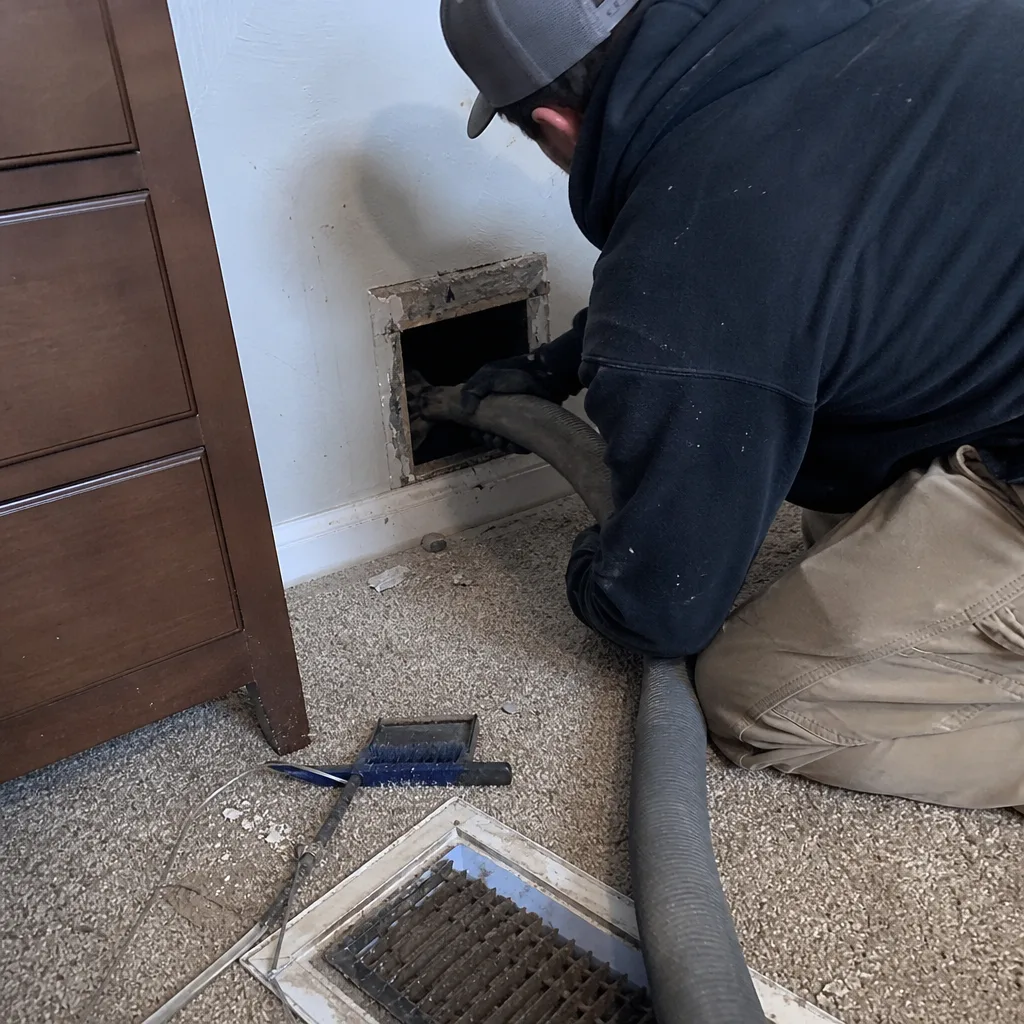 Before
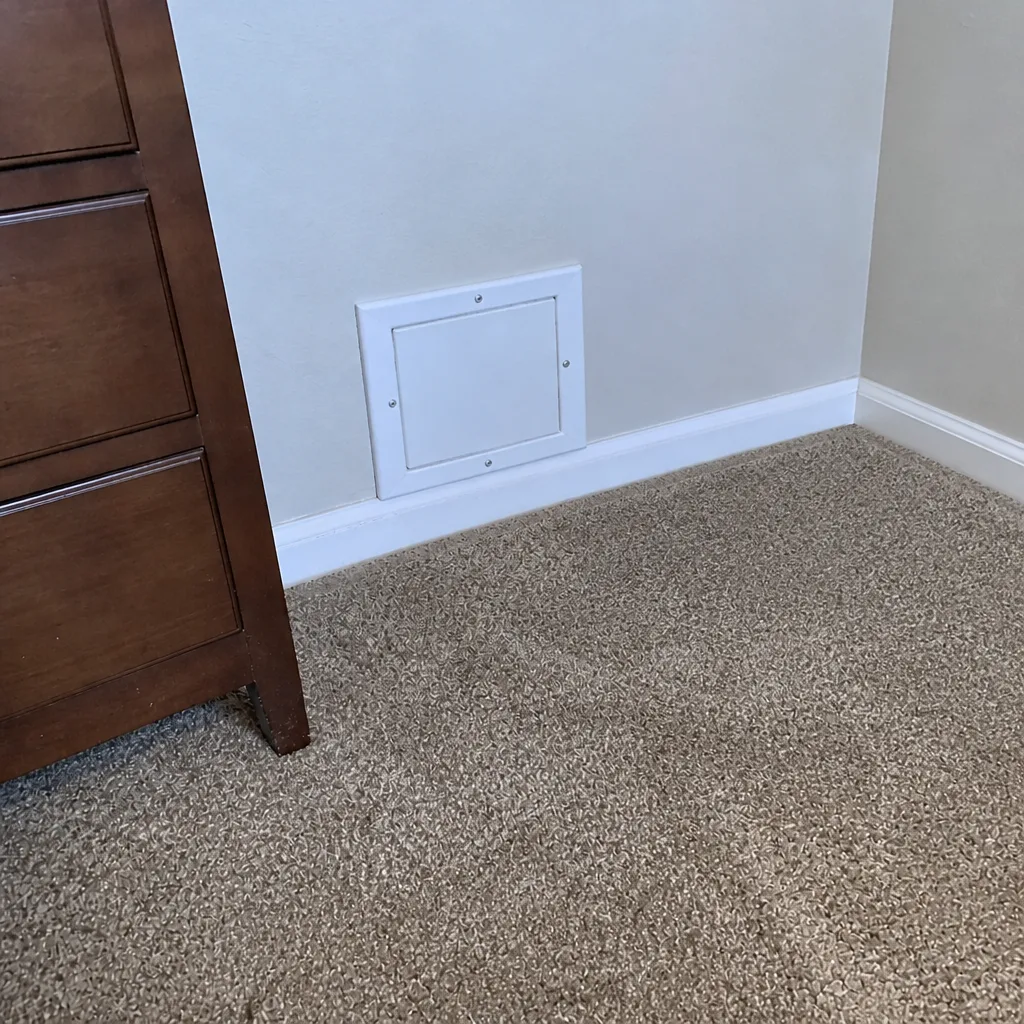 After
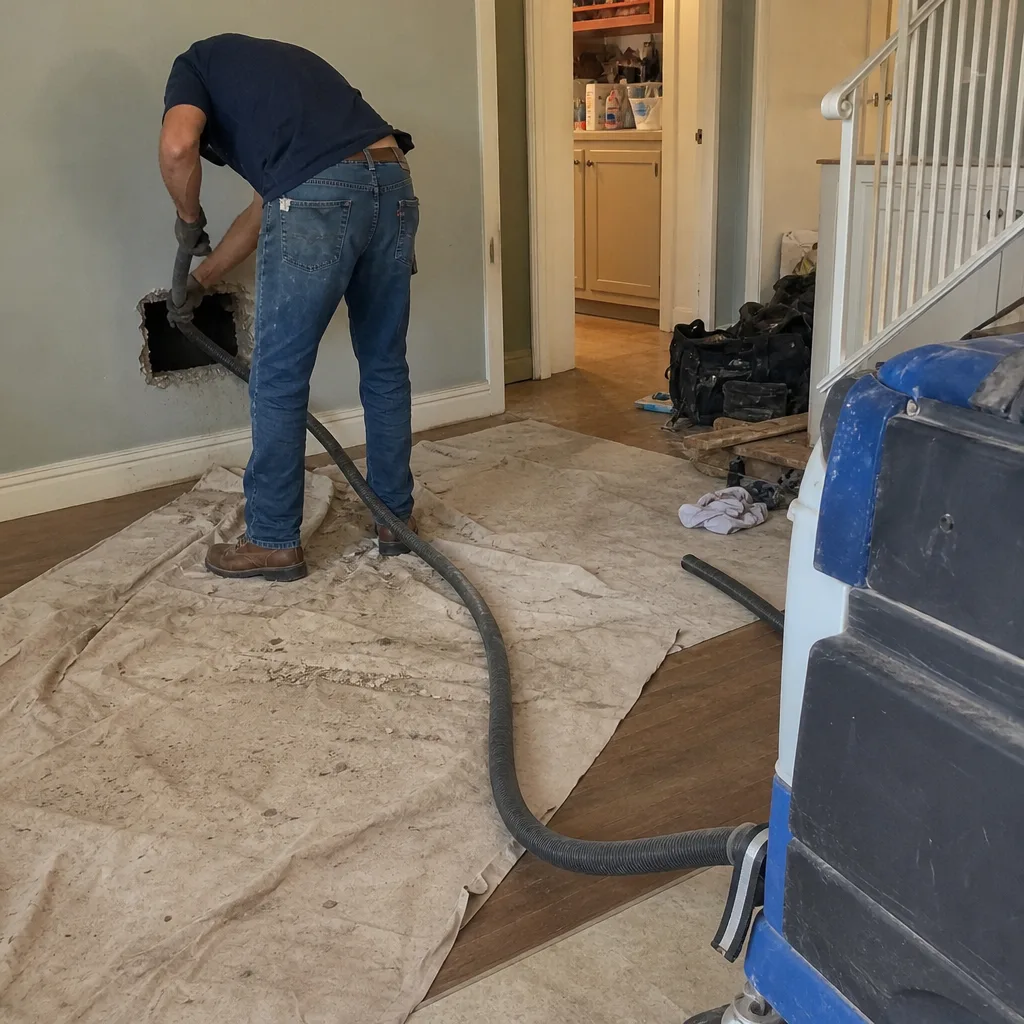 Before
 After
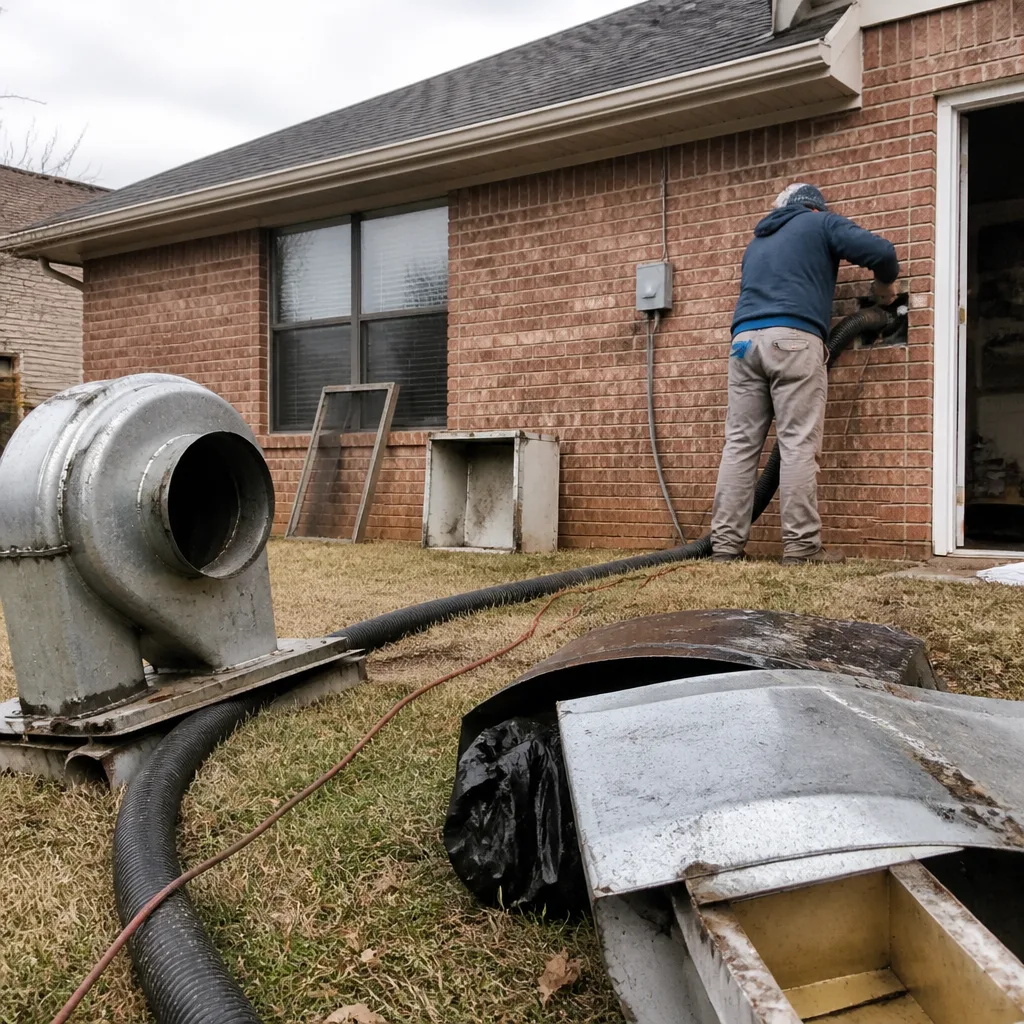 Before
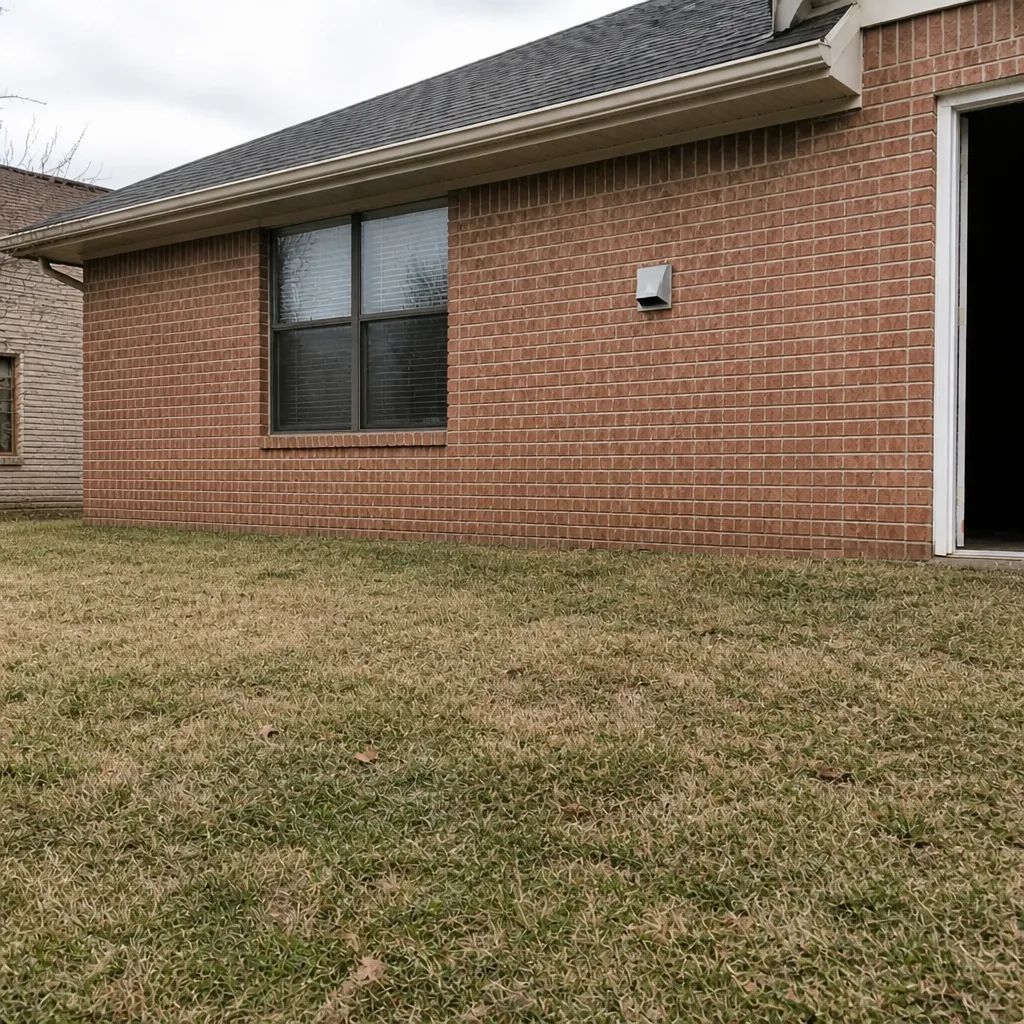 After
When to Call a Professional
Call a duct professional if any of these apply in the days or weeks after a weather event in Oklahoma City. The system ran during the event itself. The house took any water intrusion, however minor. There’s a smoke smell inside when the HVAC runs. Someone in the household is experiencing a new or worsened respiratory response after cleaning efforts have been made. A filter loads faster than normal, or dust re-settles on horizontal surfaces within hours of being wiped. Any of these point to the duct system delivering contamination rather than removing it, and the fastest fix is a professional inspection of the system interior.
We operate a focused specialty – air duct cleaning, dryer vent cleaning, and air duct repair. That’s the full scope of duct system health, and it’s what we do. Shoreline Duct Cleaning offers free estimates in Oklahoma City – call (855) 360-8688. Our technicians have up to experience, and we use the same equipment specified on commercial and remediation sites: Rotobrush rotary-brush systems, Nikro HEPA vacuums, and Abatement Technologies filtration products.
Frequently Asked Questions
As soon as you can confirm the system is dry and the building is safe to enter. If no water entered the home, an inspection within the first week is reasonable – running the HVAC in the meantime is the real risk, because it redistributes whatever came in. If water was present, wait for the moisture to be addressed before cleaning begins. Call (855) 360-8688 for an exact quote – estimates are free.
Sometimes, if the contamination is directly tied to a covered event and you can document it. Coverage varies by policy and by insurer, and duct cleaning is often treated as maintenance unless the event’s connection is clear. Your best preparation is the pre-event baseline plus before-and-after documentation from a professional cleaning.
If the tornado passed close enough to affect pressure in your area, an inspection is worth the call. Duct contamination doesn’t require structural damage to happen – it requires a pressure differential, and a tornado creates one regardless of whether it leaves a mark on your property. A quick professional assessment answers the question definitively.
A standard low-MERV filter captures some larger smoke particles but leaves the fine carbon-based particulate that makes smoke an indoor air problem. A higher-MERV filter helps noticeably, but only if it fits tight in the frame – filter bypass defeats even a good filter. For Oklahoma wildfire smoke events, a clean filter plus a documented inspection of the system for bypass and leaks is the practical preparation.
Because the low figure is usually per-vent, per-system teaser pricing designed to change once the technician is inside the house. The honest structure is one flat price per system, agreed in writing before work begins, with before-and-after photos of your own ducts to confirm what was actually done. Ask for the written estimate and the photos. If the company won’t provide either, move on.
Ask for before-and-after photos of your own ducts – not a stock image from a brochure, but your return plenum, your supply register, your filter. Any company doing legitimate work will provide them without hesitation. Call (855) 360-8688 for an exact quote – estimates are free.
Yes, and it’s the most overlooked part. Dryer vents are one of the leading causes of residential fires, and post-storm debris and lint combined create a genuinely unsafe combination. Treating it as a fire-safety service rather than an add-on is the correct priority. It’s a separate service from air duct work, but it belongs in any full home-safety review.
Yes – air duct repair is a dedicated service, not an upsell. Where a cleaning job reveals disconnected sections, torn lining, or leaking joints, we can address the repair on the same job rather than sending you to a second contractor. That’s what we mean when we say we clean the system and then confirm it’s sealed.
The Bottom Line
Oklahoma City homes face three weather emergencies that hit ductwork: tornado pressure events, flash flooding, and wildfire smoke. In each case, the duct system is either protected by preparation or contaminated by it, and the home’s visible condition doesn’t reliably tell you which. The practical plan is simple – build a photo baseline before storm season, filter and seal the system against smoke, dry and inspect anything that touched water, and document everything with before-and-after photos when a professional cleaning is performed. Clean first, run second. Repair what you find rather than cleaning over it. For air duct cleaning and dryer vent cleaning in Oklahoma City, call (855) 360-8688. We answer 24/7. Fast dispatch from 7am to 7pm, Sunday through Friday.
Written by the team at Shoreline Duct Cleaning.